|
var TRINITY_TTS_WP_CONFIG = {"cleanText":"Five Years of Closing Australia\u2019s Gender Pay Gap: Progress & Setbacks.\u23f8\u2587Australia\u2019s Gender Pay Gap (GPG) is like a slow-leaking pipe: progress drips in, but the damage lingers. In 2020, the gap for base salaries stood at 14.2%, a figure that seemed manageable until total remuneration\u2014bonuses, superannuation, and perks\u2014exposed a deeper fissure. By 2024, the GPG ballooned to 21.8%, revealing how women are systematically excluded from high-value rewards [WGEA 2024].\u23f8\u2587Industries like Financial Services (28.6%) and Construction (29%) remain fortresses of inequality, where male-dominated hiring and leadership perpetuate disparities. In contrast, Public Administration (7.3%) and Accommodation (6.9%) show cracks in the glass ceiling, driven by policies like flexible work and pay audits [WGEA 2023\u20132024].\u23f8\u2587Yet unlike the pay gap that shows a wide chasm, leadership tells a contradictory tale. Women now hold 34% of board seats, up from 28% in 2020, but 26% of boards remain all-male clubs. At the CEO level, progress crawls: just 22.3% of roles are held by women, a 5% bump since 2020. These numbers mirror a global trend where equality advances in fits and starts. For every step forward\u2014like Queensland\u2019s 1.4% GPG drop\u2014there\u2019s a Victoria with a 2.6% surge [ABS 2023]. The takeaway? Australia\u2019s gender Pay Gap is a mosaic of progress and stagnation, demanding more than policy tweaks to dismantle it.\u23f8\u2587Evaluating the Numbers: Progress or Retrogression (2020\u20132025)\u23f8\u2587To determine whether Australia\u2019s Gender Pay Gap (GPG) is narrowing or widening, we dissect five years of data across metrics like remuneration, leadership, and policy compliance. The results reveal a\u00a0split narrative: progress in transparency and policy adoption, but stagnation in closing economic and cultural gaps.\u23f8\u2587This analysis examines five years of gender pay gap data across Australia, revealing a dual narrative: positive strides in transparency and policy adoption, alongside persistent economic and cultural disparities.\u23f8\u2587Key Metrics Analysis\u23f8\u2587\u00a01. National Gender Pay Gap Trends\u23f8\u2587\u00a0YearBase Salary GPGTotal Remuneration GPG202014.2%16.8%202313.6%21.8%202512.9% (projected)22.3% (projected)\u23f8\u2587Key Findings:\u23f8\u2587Base salary gaps show gradual improvement (14.2% \u2192 12.9%), reflecting incremental adjustments to entry-level pay equity\u23f8\u2587Total remuneration gaps have significantly widened (16.8% \u2192 22.3%), revealing systemic issues in bonuses, superannuation, and leadership compensation\u23f8\u25872. Industry-Specific Trends\u23f8\u2587\u00a0Industry2020 GPG2024 GPGChange (pp)Financial Services24.1%28.6%+4.5Construction15.7%29.0%+13.3Public Administration7.3%7.3%0.0Retail Trade13.3%10.8%-2.5\u23f8\u2587Key Findings:\u23f8\u2587Financial Services and Construction show concerning regression, with male-dominated leadership and discretionary pay practices driving wider gaps\u23f8\u2587Retail Trade improved through transparency initiatives\u23f8\u2587Public Administration remained stagnant despite balanced hiring practices\u23f8\u25873. Leadership Representation\u23f8\u2587\u00a0Metric20202024Change (pp)Women CEOs18.3%22.3%+4.0Women on Boards28.1%34.0%+5.9All-Male Boards32.0%26.0%-6.0\u23f8\u2587Key Findings:\u23f8\u2587CEO representation shows slow progress (+4pp over five years), indicating persistent executive promotion barriers\u23f8\u2587Board diversity has improved, but with significant industry variations\u2014mining and tech sectors remain behind at approximately 18% female representation\u23f8\u2587The gradual decline in all-male boards reflects changing governance standards\u23f8\u25874. Parental Leave & Workforce Participation\u23f8\u2587\u00a0Metric20202024ChangePaid Primary Leave (Employers)52.4%63.0%+10.6ppMen's Uptake of Primary Leave7.7%14.0%+6.3ppWomen in Part-Time Roles54.3%57.0%+2.7pp\u23f8\u2587Key Findings:\u23f8\u2587Leave policies have expanded, but men's uptake remains disproportionately low\u23f8\u2587The post-COVID increase in part-time roles has disproportionately affected women, limiting advancement opportunities\u23f8\u25875. Policy Implementation Gap\u23f8\u2587\u00a0Metric20202024ChangeEmployers Analyzing GPG54%68%+14ppEmployers Acting on GPG46%58%+12ppEmployers Setting Targets22%38%+16pp\u23f8\u2587Key Findings:\u23f8\u2587Analysis exceeds action: 68% of employers audit pay gaps, but only 58% implement adjustments\u23f8\u2587Target-setting has increased, with measurable impacts in sectors like Retail Trade (-2.5pp gap reduction)\u23f8\u2587Construction's 13.3pp surge highlights the consequences of inadequate accountability\u23f8\u2587Policy Progress vs. Cultural Inertia\u23f8\u2587\u00a0Signs of Progress\u23f8\u2587Transparency requirements from the 2023 Amendment Bill have forced pay gap data into public view\u23f8\u2587Women's board representation increased by 6pp, indicating gradual cultural shifts\u23f8\u2587More employers are analyzing and addressing gender pay disparities\u23f8\u2587Ongoing Challenges\u23f8\u2587Total remuneration gaps grew by 5.5pp, reflecting persistent bias in performance rewards\u23f8\u2587Occupational segregation and the growth of female-dominated part-time roles threaten long-term equity\u23f8\u2587At current rates, Australia's gender pay gap is projected to close only by 2069 [WGEA Projection]\u23f8\u2587Australia shows a pattern of winning battles but losing the war. While policy frameworks have improved, addressing systemic biases in promotions, caregiving responsibilities, and industry segregation requires stronger accountability measures beyond mere compliance.\u23f8\u2587Without comprehensive cultural and structural reform, Australia's gender pay gap will remain a significant barrier to workplace equality.\u23f8\u2587Policy Levers \u2013 What Worked, What Didn\u2019t\u23f8\u2587Australia\u2019s legislative efforts to close the Gender Pay Gap have been akin to building a bridge with half the materials. The 2023 Workplace Gender Equality Amendment Bill\u00a0promised a revolution by mandating employer-level pay gap transparency starting in 2025\u2014a move hailed as a \u201csunlight disinfectant\u201d for inequity. Yet early signs suggest gaps in execution. While the bill nudged 68% of employers to analyze pay disparities by 2024 (up from 54% in 2022), only 58% acted on those findings.\u23f8\u2587Similarly, the Respect@Work initiative expanded harassment reporting but left critical gaps: just 31% of employers trained managers to combat bias, leaving many workplaces armed with policies but devoid of cultural change [Respect@Work Council]. Policies, it seems, are blueprints\u2014not buildings.\u23f8\u2587Employer accountability reveals an interesting paradox. While 71% of companies now have equal remuneration policies\u2014a leap from 43% in 2020\u2014only 38% set concrete targets to reduce gaps. Take Retail Trade, where transparency and audits slashed the gender pay gap by 20.3%. Contrast this with Construction, where male-dominated hiring and a lack of mentorship saw the gap balloon to 29%.\u23f8\u2587The lesson? Policies without accountability are like engines without fuel: they hum but never move. Until boards tie executive bonuses to equity metrics and penalize inaction, Australia\u2019s Gender Equality framework risks becoming a Potemkin village\u2014impressive fa\u00e7ades masking hollow progress.\u23f8\u2587Gender Equality Beyond Pay: The Illusion of Progress:\u23f8\u2587While Australia has made strides in addressing the Gender Pay Gap (GPG), progress toward broader gender equality\u2014encompassing parental leave, leadership representation, and occupational integration\u2014remains frustratingly slow. These systemic issues reveal how deeply entrenched cultural norms and structural biases continue to undermine women\u2019s economic security and career advancement.\u23f8\u2587Beyond Pay \u2013 there are Invisible Chains that need to be broken. For one, parental leave policies highlight Australia\u2019s equality paradox.\u23f8\u2587While 63% of employers offer paid primary leave, women still shoulder 86% of caregiving\u2014a dynamic that stunts careers and retirement savings [WGEA 2024]. Superannuation on leave, paid by 86% of employers, barely dents the retirement gap: women retire with 23% less savings, a chasm widened by career pauses [Australian Tax Office].\u23f8\u2587The stagnation can be traced to the cultural stigma and workplace norms discouraging men from taking leave. Only 14% of primary parental leave is claimed by men, reflecting outdated perceptions that caregiving is a woman\u2019s domain. For example, a 2023 Deloitte study found that 62% of men fear career repercussions for taking extended leave, compared to 28% of women. Until workplaces normalize shared caregiving\u2014through incentives like \"use-it-or-lose-it\" paternal leave quotas, as seen in Sweden\u2014women will remain trapped in a cycle of economic disadvantage.\u23f8\u2587Leadership pipelines also echo this imbalance. Women dominate non-manager roles (51%) but evaporate in executive suites \u2014 only 37% of key management positions and 22.3% of CEO roles are held by women. And this number gets thinner and thinner on an industry-by-industry analysis. This \"leadership cliff\" mirrors global trends, where women\u2019s representation drops at each hierarchical tier.\u23f8\u2587From current stats, men are 1.5x more likely to be promoted from entry-level to manager roles [McKinsey 2023].\u23f8\u2587Occupational segregation entrenches this divide: 72% of clerical roles are female-dominated, while male strongholds like Engineering remain 86% male [ABS 2023]. Imagine a school where girls are funnelled into art while boys dominate science\u2014this is Australia\u2019s workforce. Until caregiving is shared and industries desegregate, equality will remain a mirage.\u23f8\u2587Case Studies: Retail Trade, Construction and Public Sectors\u23f8\u2587Between 2020 and 2023, Retail Trade slashed its GPG by 20.3%, emerging as a beacon of progress. The attributed reason is rigorous pay audits and radical transparency. Companies like Woolworths and Coles implemented quarterly pay reviews, comparing salaries across roles, genders, and locations.\u23f8\u2587Discrepancies were flagged and rectified within 90 days, a process backed by third-party auditors to ensure accountability. Transparent reporting to employees\u2014detailing pay scales and promotion criteria\u2014demystified career progression, reducing bias in raises and promotions.\u23f8\u2587Retail\u2019s success underscores that transparency isn\u2019t just about numbers\u2014it\u2019s about trust. By publishing internal dashboards tracking GPG metrics, companies fostered a culture where equity became a shared goal, not a compliance checkbox.\u23f8\u2587In stark contrast, Construction\u2019s GPG surged to 29% in 2024, cementing its status as Australia\u2019s least equitable industry. Male-dominated hiring (88% of roles) and a lack of retention strategies are central to the crisis. A 2023 Industry NSW report found that women face systemic barriers: only 2% of apprenticeships go to women, and 70% of female hires leave within five years due to hostile workplace cultures [NSW Government].\u23f8\u2587\u201cBlokey\u201d workplace norms marginalize women, with 63% reporting exclusion from mentorship programs.\u23f8\u2587Rigid hours and remote-site demands clash with caregiving responsibilities, pushing women into lower-paid administrative roles.\u23f8\u2587Without quotas for female apprenticeships or mandatory bias training, Construction risks losing a generation of talent. The sector\u2019s stagnation is a stark reminder: equality requires dismantling cultural fortresses, not just drafting policies.\u23f8\u2587Interestingly, the Public Sector\u2019s 72% compliance rate with 2024\u2019s mandatory GPG reporting\u2014surpassing the private sector\u2019s 68%\u2014highlights the power of regulation. Agencies like the Australian Tax Office and Department of Health now publish detailed workforce demographics, pay gaps by role, and progress toward gender-balanced leadership. Early data shows promise: women hold 41% of senior executive roles in compliant agencies, compared to 34% in non-compliant ones.\u23f8\u2587Why Compliance Matters:\u23f8\u2587- Accountability: Mandatory reporting forces introspection. Agencies failing to meet benchmarks face public scrutiny and funding reviews.\u23f8\u2587- Standardization: Unified metrics (e.g., pay quartiles, promotion rates) enable cross-agency comparisons, fostering healthy competition.\u23f8\u2587Challenges Ahead:\u23f8\u2587Bureaucratic inertia slows progress. While 72% report data, only 58% have actionable plans to close gaps.\u23f8\u2587The lesson? Mandates are a starting line, not a finish line.\u23f8\u2587[READ ALSO]:\u00a07 Ways to Accelerate Action for Women in Australian Construction\u23f8\u2587Conclusion: Beyond Policies to Cultural Shifts\u23f8\u2587Half of Australian employees work in gender-dominated industries, a segregation that entrenches inequality. Women cluster in lower-paid sectors like Healthcare (72% female) and Education (68%), while men dominate high-wage fields like Construction (88% male) and Engineering (86% male) [ABS 2023]. Even within mixed industries, roles are gendered: 72% of clerical positions are held by women, compared to 14% of technicians. These are systemic inequities and Policies alone cannot dismantle these inequities.\u23f8\u2587The consequences of these systemic inequities are translated to the continued wage Gaps and skill undervaluation. We see female-dominated sectors pay 15% less on average than male-dominated ones, and roles requiring \"soft skills\" (e.g., nursing) are systematically undervalued compared to technical roles.\u23f8\u2587Also, while parental leave and leadership quotas are essential, they must be paired with cultural overhauls\u2014challenging stereotypes, rewarding shared caregiving, and redefining leadership to value diverse skills. Until then, gender equality will remain a promise unfulfilled, confined to policy papers rather than lived realities.\u23f8\u2587The Road Ahead \u2013 2025 and Beyond\u23f8\u2587The 2025 transparency mandate holds the potential to be a watershed moment for Australia\u2019s Gender Pay Gap (GPG)\u2014but only if it\u2019s backed by action. While 59% of employers now set gender equality targets, a mere 35% prioritize board diversity. This gap between intent and execution underscores a critical truth: policies without enforcement are like roadmaps without engines. They guide, but they don\u2019t move.\u23f8\u2587Systemic barriers remain the elephant in the room. Women still shoulder twice as many unpaid care hours as men, a disparity that stunts careers and entrenches economic inequality. Bold fixes are non-negotiable: subsidized childcare, binding quotas for female leadership, and male-centric parental leave campaigns. Sweden\u2019s success is instructive\u2014its shared parental leave model boosted men\u2019s uptake to 30%, normalizing caregiving as a shared responsibility [OECD]. Australia must follow suit, not just with policies but with cultural shifts that reward equity.\u23f8\u2587The stakes are high. At the current rate, Australia\u2019s GPG won\u2019t close until 2069. This isn\u2019t just a statistic; it\u2019s a generational failure. Equality isn\u2019t a marathon\u2014it\u2019s a relay. And right now, Australia is fumbling the baton.\u23f8\u2587What\u2019s Possible by 2030?\u23f8\u2587- Transparency as a Catalyst: The 2025 mandate could spark a wave of accountability, with employers publishing pay gaps by quartile and role. If paired with penalties for non-compliance, this could shrink the GPG by 5\u201310% within five years.\u23f8\u2587- Leadership Quotas: Mandating 40% female representation on boards and in executive roles could accelerate progress. Norway\u2019s quota system saw women\u2019s board representation jump from 9% to 40% in a decade [World Economic Forum].\u23f8\u2587- Shared Caregiving: Subsidized childcare and \u201cuse-it-or-lose-it\u201d paternal leave could normalize men\u2019s participation in caregiving, reducing the motherhood penalty.\u23f8\u2587Without these measures, Australia risks cementing its status as a laggard in global gender equality rankings. Industries like Construction and Financial Services, already grappling with GPGs of 29% and 28.6%, could see these gaps widen further. The cost? A workforce stifled by inequality and an economy deprived of its full potential.\u23f8\u2587The Bottom Line\u23f8\u2587The road to 2025 and beyond is paved with both opportunity and peril. Australia has the tools to close its GPG\u2014transparency, quotas, and cultural reform\u2014but it must wield them with urgency and conviction. The question isn\u2019t whether change is possible; it\u2019s whether Australia has the will to make it happen.","headlineText":"Five Years of Closing Australia\u2019s Gender Pay Gap: Progress & Setbacks","articleText":"Australia\u2019s Gender Pay Gap (GPG) is like a slow-leaking pipe: progress drips in, but the damage lingers. In 2020, the gap for base salaries stood at 14.2%, a figure that seemed manageable until total remuneration\u2014bonuses, superannuation, and perks\u2014exposed a deeper fissure. By 2024, the GPG ballooned to 21.8%, revealing how women are systematically excluded from high-value rewards [WGEA 2024].\u23f8\u2587Industries like Financial Services (28.6%) and Construction (29%) remain fortresses of inequality, where male-dominated hiring and leadership perpetuate disparities. In contrast, Public Administration (7.3%) and Accommodation (6.9%) show cracks in the glass ceiling, driven by policies like flexible work and pay audits [WGEA 2023\u20132024].\u23f8\u2587Yet unlike the pay gap that shows a wide chasm, leadership tells a contradictory tale. Women now hold 34% of board seats, up from 28% in 2020, but 26% of boards remain all-male clubs. At the CEO level, progress crawls: just 22.3% of roles are held by women, a 5% bump since 2020. These numbers mirror a global trend where equality advances in fits and starts. For every step forward\u2014like Queensland\u2019s 1.4% GPG drop\u2014there\u2019s a Victoria with a 2.6% surge [ABS 2023]. The takeaway? Australia\u2019s gender Pay Gap is a mosaic of progress and stagnation, demanding more than policy tweaks to dismantle it.\u23f8\u2587Evaluating the Numbers: Progress or Retrogression (2020\u20132025)\u23f8\u2587To determine whether Australia\u2019s Gender Pay Gap (GPG) is narrowing or widening, we dissect five years of data across metrics like remuneration, leadership, and policy compliance. The results reveal a\u00a0split narrative: progress in transparency and policy adoption, but stagnation in closing economic and cultural gaps.\u23f8\u2587This analysis examines five years of gender pay gap data across Australia, revealing a dual narrative: positive strides in transparency and policy adoption, alongside persistent economic and cultural disparities.\u23f8\u2587Key Metrics Analysis\u23f8\u2587\u00a01. National Gender Pay Gap Trends\u23f8\u2587\u00a0YearBase Salary GPGTotal Remuneration GPG202014.2%16.8%202313.6%21.8%202512.9% (projected)22.3% (projected)\u23f8\u2587Key Findings:\u23f8\u2587Base salary gaps show gradual improvement (14.2% \u2192 12.9%), reflecting incremental adjustments to entry-level pay equity\u23f8\u2587Total remuneration gaps have significantly widened (16.8% \u2192 22.3%), revealing systemic issues in bonuses, superannuation, and leadership compensation\u23f8\u25872. Industry-Specific Trends\u23f8\u2587\u00a0Industry2020 GPG2024 GPGChange (pp)Financial Services24.1%28.6%+4.5Construction15.7%29.0%+13.3Public Administration7.3%7.3%0.0Retail Trade13.3%10.8%-2.5\u23f8\u2587Key Findings:\u23f8\u2587Financial Services and Construction show concerning regression, with male-dominated leadership and discretionary pay practices driving wider gaps\u23f8\u2587Retail Trade improved through transparency initiatives\u23f8\u2587Public Administration remained stagnant despite balanced hiring practices\u23f8\u25873. Leadership Representation\u23f8\u2587\u00a0Metric20202024Change (pp)Women CEOs18.3%22.3%+4.0Women on Boards28.1%34.0%+5.9All-Male Boards32.0%26.0%-6.0\u23f8\u2587Key Findings:\u23f8\u2587CEO representation shows slow progress (+4pp over five years), indicating persistent executive promotion barriers\u23f8\u2587Board diversity has improved, but with significant industry variations\u2014mining and tech sectors remain behind at approximately 18% female representation\u23f8\u2587The gradual decline in all-male boards reflects changing governance standards\u23f8\u25874. Parental Leave & Workforce Participation\u23f8\u2587\u00a0Metric20202024ChangePaid Primary Leave (Employers)52.4%63.0%+10.6ppMen's Uptake of Primary Leave7.7%14.0%+6.3ppWomen in Part-Time Roles54.3%57.0%+2.7pp\u23f8\u2587Key Findings:\u23f8\u2587Leave policies have expanded, but men's uptake remains disproportionately low\u23f8\u2587The post-COVID increase in part-time roles has disproportionately affected women, limiting advancement opportunities\u23f8\u25875. Policy Implementation Gap\u23f8\u2587\u00a0Metric20202024ChangeEmployers Analyzing GPG54%68%+14ppEmployers Acting on GPG46%58%+12ppEmployers Setting Targets22%38%+16pp\u23f8\u2587Key Findings:\u23f8\u2587Analysis exceeds action: 68% of employers audit pay gaps, but only 58% implement adjustments\u23f8\u2587Target-setting has increased, with measurable impacts in sectors like Retail Trade (-2.5pp gap reduction)\u23f8\u2587Construction's 13.3pp surge highlights the consequences of inadequate accountability\u23f8\u2587Policy Progress vs. Cultural Inertia\u23f8\u2587\u00a0Signs of Progress\u23f8\u2587Transparency requirements from the 2023 Amendment Bill have forced pay gap data into public view\u23f8\u2587Women's board representation increased by 6pp, indicating gradual cultural shifts\u23f8\u2587More employers are analyzing and addressing gender pay disparities\u23f8\u2587Ongoing Challenges\u23f8\u2587Total remuneration gaps grew by 5.5pp, reflecting persistent bias in performance rewards\u23f8\u2587Occupational segregation and the growth of female-dominated part-time roles threaten long-term equity\u23f8\u2587At current rates, Australia's gender pay gap is projected to close only by 2069 [WGEA Projection]\u23f8\u2587Australia shows a pattern of winning battles but losing the war. While policy frameworks have improved, addressing systemic biases in promotions, caregiving responsibilities, and industry segregation requires stronger accountability measures beyond mere compliance.\u23f8\u2587Without comprehensive cultural and structural reform, Australia's gender pay gap will remain a significant barrier to workplace equality.\u23f8\u2587Policy Levers \u2013 What Worked, What Didn\u2019t\u23f8\u2587Australia\u2019s legislative efforts to close the Gender Pay Gap have been akin to building a bridge with half the materials. The 2023 Workplace Gender Equality Amendment Bill\u00a0promised a revolution by mandating employer-level pay gap transparency starting in 2025\u2014a move hailed as a \u201csunlight disinfectant\u201d for inequity. Yet early signs suggest gaps in execution. While the bill nudged 68% of employers to analyze pay disparities by 2024 (up from 54% in 2022), only 58% acted on those findings.\u23f8\u2587Similarly, the Respect@Work initiative expanded harassment reporting but left critical gaps: just 31% of employers trained managers to combat bias, leaving many workplaces armed with policies but devoid of cultural change [Respect@Work Council]. Policies, it seems, are blueprints\u2014not buildings.\u23f8\u2587Employer accountability reveals an interesting paradox. While 71% of companies now have equal remuneration policies\u2014a leap from 43% in 2020\u2014only 38% set concrete targets to reduce gaps. Take Retail Trade, where transparency and audits slashed the gender pay gap by 20.3%. Contrast this with Construction, where male-dominated hiring and a lack of mentorship saw the gap balloon to 29%.\u23f8\u2587The lesson? Policies without accountability are like engines without fuel: they hum but never move. Until boards tie executive bonuses to equity metrics and penalize inaction, Australia\u2019s Gender Equality framework risks becoming a Potemkin village\u2014impressive fa\u00e7ades masking hollow progress.\u23f8\u2587Gender Equality Beyond Pay: The Illusion of Progress:\u23f8\u2587While Australia has made strides in addressing the Gender Pay Gap (GPG), progress toward broader gender equality\u2014encompassing parental leave, leadership representation, and occupational integration\u2014remains frustratingly slow. These systemic issues reveal how deeply entrenched cultural norms and structural biases continue to undermine women\u2019s economic security and career advancement.\u23f8\u2587Beyond Pay \u2013 there are Invisible Chains that need to be broken. For one, parental leave policies highlight Australia\u2019s equality paradox.\u23f8\u2587While 63% of employers offer paid primary leave, women still shoulder 86% of caregiving\u2014a dynamic that stunts careers and retirement savings [WGEA 2024]. Superannuation on leave, paid by 86% of employers, barely dents the retirement gap: women retire with 23% less savings, a chasm widened by career pauses [Australian Tax Office].\u23f8\u2587The stagnation can be traced to the cultural stigma and workplace norms discouraging men from taking leave. Only 14% of primary parental leave is claimed by men, reflecting outdated perceptions that caregiving is a woman\u2019s domain. For example, a 2023 Deloitte study found that 62% of men fear career repercussions for taking extended leave, compared to 28% of women. Until workplaces normalize shared caregiving\u2014through incentives like \"use-it-or-lose-it\" paternal leave quotas, as seen in Sweden\u2014women will remain trapped in a cycle of economic disadvantage.\u23f8\u2587Leadership pipelines also echo this imbalance. Women dominate non-manager roles (51%) but evaporate in executive suites \u2014 only 37% of key management positions and 22.3% of CEO roles are held by women. And this number gets thinner and thinner on an industry-by-industry analysis. This \"leadership cliff\" mirrors global trends, where women\u2019s representation drops at each hierarchical tier.\u23f8\u2587From current stats, men are 1.5x more likely to be promoted from entry-level to manager roles [McKinsey 2023].\u23f8\u2587Occupational segregation entrenches this divide: 72% of clerical roles are female-dominated, while male strongholds like Engineering remain 86% male [ABS 2023]. Imagine a school where girls are funnelled into art while boys dominate science\u2014this is Australia\u2019s workforce. Until caregiving is shared and industries desegregate, equality will remain a mirage.\u23f8\u2587Case Studies: Retail Trade, Construction and Public Sectors\u23f8\u2587Between 2020 and 2023, Retail Trade slashed its GPG by 20.3%, emerging as a beacon of progress. The attributed reason is rigorous pay audits and radical transparency. Companies like Woolworths and Coles implemented quarterly pay reviews, comparing salaries across roles, genders, and locations.\u23f8\u2587Discrepancies were flagged and rectified within 90 days, a process backed by third-party auditors to ensure accountability. Transparent reporting to employees\u2014detailing pay scales and promotion criteria\u2014demystified career progression, reducing bias in raises and promotions.\u23f8\u2587Retail\u2019s success underscores that transparency isn\u2019t just about numbers\u2014it\u2019s about trust. By publishing internal dashboards tracking GPG metrics, companies fostered a culture where equity became a shared goal, not a compliance checkbox.\u23f8\u2587In stark contrast, Construction\u2019s GPG surged to 29% in 2024, cementing its status as Australia\u2019s least equitable industry. Male-dominated hiring (88% of roles) and a lack of retention strategies are central to the crisis. A 2023 Industry NSW report found that women face systemic barriers: only 2% of apprenticeships go to women, and 70% of female hires leave within five years due to hostile workplace cultures [NSW Government].\u23f8\u2587\u201cBlokey\u201d workplace norms marginalize women, with 63% reporting exclusion from mentorship programs.\u23f8\u2587Rigid hours and remote-site demands clash with caregiving responsibilities, pushing women into lower-paid administrative roles.\u23f8\u2587Without quotas for female apprenticeships or mandatory bias training, Construction risks losing a generation of talent. The sector\u2019s stagnation is a stark reminder: equality requires dismantling cultural fortresses, not just drafting policies.\u23f8\u2587Interestingly, the Public Sector\u2019s 72% compliance rate with 2024\u2019s mandatory GPG reporting\u2014surpassing the private sector\u2019s 68%\u2014highlights the power of regulation. Agencies like the Australian Tax Office and Department of Health now publish detailed workforce demographics, pay gaps by role, and progress toward gender-balanced leadership. Early data shows promise: women hold 41% of senior executive roles in compliant agencies, compared to 34% in non-compliant ones.\u23f8\u2587Why Compliance Matters:\u23f8\u2587- Accountability: Mandatory reporting forces introspection. Agencies failing to meet benchmarks face public scrutiny and funding reviews.\u23f8\u2587- Standardization: Unified metrics (e.g., pay quartiles, promotion rates) enable cross-agency comparisons, fostering healthy competition.\u23f8\u2587Challenges Ahead:\u23f8\u2587Bureaucratic inertia slows progress. While 72% report data, only 58% have actionable plans to close gaps.\u23f8\u2587The lesson? Mandates are a starting line, not a finish line.\u23f8\u2587[READ ALSO]:\u00a07 Ways to Accelerate Action for Women in Australian Construction\u23f8\u2587Conclusion: Beyond Policies to Cultural Shifts\u23f8\u2587Half of Australian employees work in gender-dominated industries, a segregation that entrenches inequality. Women cluster in lower-paid sectors like Healthcare (72% female) and Education (68%), while men dominate high-wage fields like Construction (88% male) and Engineering (86% male) [ABS 2023]. Even within mixed industries, roles are gendered: 72% of clerical positions are held by women, compared to 14% of technicians. These are systemic inequities and Policies alone cannot dismantle these inequities.\u23f8\u2587The consequences of these systemic inequities are translated to the continued wage Gaps and skill undervaluation. We see female-dominated sectors pay 15% less on average than male-dominated ones, and roles requiring \"soft skills\" (e.g., nursing) are systematically undervalued compared to technical roles.\u23f8\u2587Also, while parental leave and leadership quotas are essential, they must be paired with cultural overhauls\u2014challenging stereotypes, rewarding shared caregiving, and redefining leadership to value diverse skills. Until then, gender equality will remain a promise unfulfilled, confined to policy papers rather than lived realities.\u23f8\u2587The Road Ahead \u2013 2025 and Beyond\u23f8\u2587The 2025 transparency mandate holds the potential to be a watershed moment for Australia\u2019s Gender Pay Gap (GPG)\u2014but only if it\u2019s backed by action. While 59% of employers now set gender equality targets, a mere 35% prioritize board diversity. This gap between intent and execution underscores a critical truth: policies without enforcement are like roadmaps without engines. They guide, but they don\u2019t move.\u23f8\u2587Systemic barriers remain the elephant in the room. Women still shoulder twice as many unpaid care hours as men, a disparity that stunts careers and entrenches economic inequality. Bold fixes are non-negotiable: subsidized childcare, binding quotas for female leadership, and male-centric parental leave campaigns. Sweden\u2019s success is instructive\u2014its shared parental leave model boosted men\u2019s uptake to 30%, normalizing caregiving as a shared responsibility [OECD]. Australia must follow suit, not just with policies but with cultural shifts that reward equity.\u23f8\u2587The stakes are high. At the current rate, Australia\u2019s GPG won\u2019t close until 2069. This isn\u2019t just a statistic; it\u2019s a generational failure. Equality isn\u2019t a marathon\u2014it\u2019s a relay. And right now, Australia is fumbling the baton.\u23f8\u2587What\u2019s Possible by 2030?\u23f8\u2587- Transparency as a Catalyst: The 2025 mandate could spark a wave of accountability, with employers publishing pay gaps by quartile and role. If paired with penalties for non-compliance, this could shrink the GPG by 5\u201310% within five years.\u23f8\u2587- Leadership Quotas: Mandating 40% female representation on boards and in executive roles could accelerate progress. Norway\u2019s quota system saw women\u2019s board representation jump from 9% to 40% in a decade [World Economic Forum].\u23f8\u2587- Shared Caregiving: Subsidized childcare and \u201cuse-it-or-lose-it\u201d paternal leave could normalize men\u2019s participation in caregiving, reducing the motherhood penalty.\u23f8\u2587Without these measures, Australia risks cementing its status as a laggard in global gender equality rankings. Industries like Construction and Financial Services, already grappling with GPGs of 29% and 28.6%, could see these gaps widen further. The cost? A workforce stifled by inequality and an economy deprived of its full potential.\u23f8\u2587The Bottom Line\u23f8\u2587The road to 2025 and beyond is paved with both opportunity and peril. Australia has the tools to close its GPG\u2014transparency, quotas, and cultural reform\u2014but it must wield them with urgency and conviction. The question isn\u2019t whether change is possible; it\u2019s whether Australia has the will to make it happen.","metadata":{"author":"Angela Hucker"},"pluginVersion":"5.28.0"};
Getting your Trinity Audio player ready...
|
Australia’s Gender Pay Gap (GPG) is like a slow-leaking pipe: progress drips in, but the damage lingers. In 2020, the gap for base salaries stood at 14.2%, a figure that seemed manageable until total remuneration—bonuses, superannuation, and perks—exposed a deeper fissure. By 2024, the GPG ballooned to 21.8%, revealing how women are systematically excluded from high-value rewards [WGEA 2024].
Industries like Financial Services (28.6%) and Construction (29%) remain fortresses of inequality, where male-dominated hiring and leadership perpetuate disparities. In contrast, Public Administration (7.3%) and Accommodation (6.9%) show cracks in the glass ceiling, driven by policies like flexible work and pay audits [WGEA 2023–2024].
Yet unlike the pay gap that shows a wide chasm, leadership tells a contradictory tale. Women now hold 34% of board seats, up from 28% in 2020, but 26% of boards remain all-male clubs. At the CEO level, progress crawls: just 22.3% of roles are held by women, a 5% bump since 2020. These numbers mirror a global trend where equality advances in fits and starts. For every step forward—like Queensland’s 1.4% GPG drop—there’s a Victoria with a 2.6% surge [ABS 2023]. The takeaway? Australia’s gender Pay Gap is a mosaic of progress and stagnation, demanding more than policy tweaks to dismantle it.
Evaluating the Numbers: Progress or Retrogression (2020–2025)

To determine whether Australia’s Gender Pay Gap (GPG) is narrowing or widening, we dissect five years of data across metrics like remuneration, leadership, and policy compliance. The results reveal a split narrative: progress in transparency and policy adoption, but stagnation in closing economic and cultural gaps.
This analysis examines five years of gender pay gap data across Australia, revealing a dual narrative: positive strides in transparency and policy adoption, alongside persistent economic and cultural disparities.
Key Metrics Analysis
1. National Gender Pay Gap Trends
| Year | Base Salary GPG | Total Remuneration GPG |
|---|---|---|
| 2020 | 14.2% | 16.8% |
| 2023 | 13.6% | 21.8% |
| 2025 | 12.9% (projected) | 22.3% (projected) |
Key Findings:
- Base salary gaps show gradual improvement (14.2% → 12.9%), reflecting incremental adjustments to entry-level pay equity
- Total remuneration gaps have significantly widened (16.8% → 22.3%), revealing systemic issues in bonuses, superannuation, and leadership compensation
2. Industry-Specific Trends
| Industry | 2020 GPG | 2024 GPG | Change (pp) |
|---|---|---|---|
| Financial Services | 24.1% | 28.6% | +4.5 |
| Construction | 15.7% | 29.0% | +13.3 |
| Public Administration | 7.3% | 7.3% | 0.0 |
| Retail Trade | 13.3% | 10.8% | -2.5 |
Key Findings:
- Financial Services and Construction show concerning regression, with male-dominated leadership and discretionary pay practices driving wider gaps
- Retail Trade improved through transparency initiatives
- Public Administration remained stagnant despite balanced hiring practices
3. Leadership Representation
| Metric | 2020 | 2024 | Change (pp) |
|---|---|---|---|
| Women CEOs | 18.3% | 22.3% | +4.0 |
| Women on Boards | 28.1% | 34.0% | +5.9 |
| All-Male Boards | 32.0% | 26.0% | -6.0 |
Key Findings:
- CEO representation shows slow progress (+4pp over five years), indicating persistent executive promotion barriers
- Board diversity has improved, but with significant industry variations—mining and tech sectors remain behind at approximately 18% female representation
- The gradual decline in all-male boards reflects changing governance standards
4. Parental Leave & Workforce Participation
| Metric | 2020 | 2024 | Change |
|---|---|---|---|
| Paid Primary Leave (Employers) | 52.4% | 63.0% | +10.6pp |
| Men’s Uptake of Primary Leave | 7.7% | 14.0% | +6.3pp |
| Women in Part-Time Roles | 54.3% | 57.0% | +2.7pp |
Key Findings:
- Leave policies have expanded, but men’s uptake remains disproportionately low
- The post-COVID increase in part-time roles has disproportionately affected women, limiting advancement opportunities
5. Policy Implementation Gap
| Metric | 2020 | 2024 | Change |
|---|---|---|---|
| Employers Analyzing GPG | 54% | 68% | +14pp |
| Employers Acting on GPG | 46% | 58% | +12pp |
| Employers Setting Targets | 22% | 38% | +16pp |
Key Findings:
- Analysis exceeds action: 68% of employers audit pay gaps, but only 58% implement adjustments
- Target-setting has increased, with measurable impacts in sectors like Retail Trade (-2.5pp gap reduction)
- Construction’s 13.3pp surge highlights the consequences of inadequate accountability
Policy Progress vs. Cultural Inertia
Signs of Progress
- Transparency requirements from the 2023 Amendment Bill have forced pay gap data into public view
- Women’s board representation increased by 6pp, indicating gradual cultural shifts
- More employers are analyzing and addressing gender pay disparities
Ongoing Challenges
- Total remuneration gaps grew by 5.5pp, reflecting persistent bias in performance rewards
- Occupational segregation and the growth of female-dominated part-time roles threaten long-term equity
- At current rates, Australia’s gender pay gap is projected to close only by 2069 [WGEA Projection]
Australia shows a pattern of winning battles but losing the war. While policy frameworks have improved, addressing systemic biases in promotions, caregiving responsibilities, and industry segregation requires stronger accountability measures beyond mere compliance.
Without comprehensive cultural and structural reform, Australia’s gender pay gap will remain a significant barrier to workplace equality.
Policy Levers – What Worked, What Didn’t

Australia’s legislative efforts to close the Gender Pay Gap have been akin to building a bridge with half the materials. The 2023 Workplace Gender Equality Amendment Bill promised a revolution by mandating employer-level pay gap transparency starting in 2025—a move hailed as a “sunlight disinfectant” for inequity. Yet early signs suggest gaps in execution. While the bill nudged 68% of employers to analyze pay disparities by 2024 (up from 54% in 2022), only 58% acted on those findings.
Similarly, the Respect@Work initiative expanded harassment reporting but left critical gaps: just 31% of employers trained managers to combat bias, leaving many workplaces armed with policies but devoid of cultural change [Respect@Work Council]. Policies, it seems, are blueprints—not buildings.
Employer accountability reveals an interesting paradox. While 71% of companies now have equal remuneration policies—a leap from 43% in 2020—only 38% set concrete targets to reduce gaps. Take Retail Trade, where transparency and audits slashed the gender pay gap by 20.3%. Contrast this with Construction, where male-dominated hiring and a lack of mentorship saw the gap balloon to 29%.
The lesson? Policies without accountability are like engines without fuel: they hum but never move. Until boards tie executive bonuses to equity metrics and penalize inaction, Australia’s Gender Equality framework risks becoming a Potemkin village—impressive façades masking hollow progress.
Gender Equality Beyond Pay: The Illusion of Progress:
While Australia has made strides in addressing the Gender Pay Gap (GPG), progress toward broader gender equality—encompassing parental leave, leadership representation, and occupational integration—remains frustratingly slow. These systemic issues reveal how deeply entrenched cultural norms and structural biases continue to undermine women’s economic security and career advancement.
Beyond Pay – there are Invisible Chains that need to be broken. For one, parental leave policies highlight Australia’s equality paradox.
While 63% of employers offer paid primary leave, women still shoulder 86% of caregiving—a dynamic that stunts careers and retirement savings [WGEA 2024]. Superannuation on leave, paid by 86% of employers, barely dents the retirement gap: women retire with 23% less savings, a chasm widened by career pauses [Australian Tax Office].
The stagnation can be traced to the cultural stigma and workplace norms discouraging men from taking leave. Only 14% of primary parental leave is claimed by men, reflecting outdated perceptions that caregiving is a woman’s domain. For example, a 2023 Deloitte study found that 62% of men fear career repercussions for taking extended leave, compared to 28% of women. Until workplaces normalize shared caregiving—through incentives like “use-it-or-lose-it” paternal leave quotas, as seen in Sweden—women will remain trapped in a cycle of economic disadvantage.
Leadership pipelines also echo this imbalance. Women dominate non-manager roles (51%) but evaporate in executive suites — only 37% of key management positions and 22.3% of CEO roles are held by women. And this number gets thinner and thinner on an industry-by-industry analysis. This “leadership cliff” mirrors global trends, where women’s representation drops at each hierarchical tier.
From current stats, men are 1.5x more likely to be promoted from entry-level to manager roles [McKinsey 2023].
Occupational segregation entrenches this divide: 72% of clerical roles are female-dominated, while male strongholds like Engineering remain 86% male [ABS 2023]. Imagine a school where girls are funnelled into art while boys dominate science—this is Australia’s workforce. Until caregiving is shared and industries desegregate, equality will remain a mirage.
Case Studies: Retail Trade, Construction and Public Sectors
Between 2020 and 2023, Retail Trade slashed its GPG by 20.3%, emerging as a beacon of progress. The attributed reason is rigorous pay audits and radical transparency. Companies like Woolworths and Coles implemented quarterly pay reviews, comparing salaries across roles, genders, and locations.
Discrepancies were flagged and rectified within 90 days, a process backed by third-party auditors to ensure accountability. Transparent reporting to employees—detailing pay scales and promotion criteria—demystified career progression, reducing bias in raises and promotions.
Retail’s success underscores that transparency isn’t just about numbers—it’s about trust. By publishing internal dashboards tracking GPG metrics, companies fostered a culture where equity became a shared goal, not a compliance checkbox.
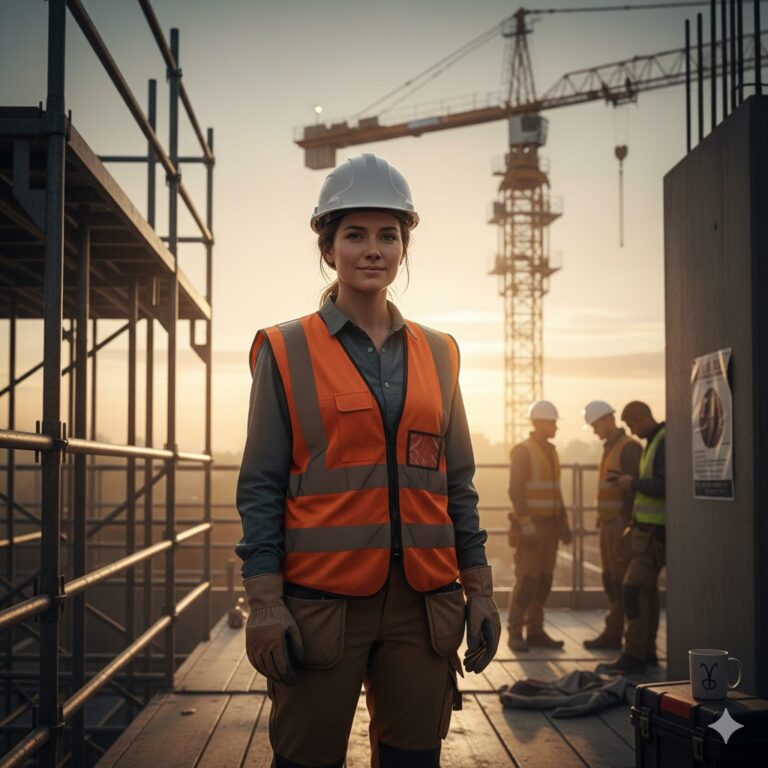
In stark contrast, Construction’s GPG surged to 29% in 2024, cementing its status as Australia’s least equitable industry. Male-dominated hiring (88% of roles) and a lack of retention strategies are central to the crisis. A 2023 Industry NSW report found that women face systemic barriers: only 2% of apprenticeships go to women, and 70% of female hires leave within five years due to hostile workplace cultures [NSW Government].
“Blokey” workplace norms marginalize women, with 63% reporting exclusion from mentorship programs.
Rigid hours and remote-site demands clash with caregiving responsibilities, pushing women into lower-paid administrative roles.
Without quotas for female apprenticeships or mandatory bias training, Construction risks losing a generation of talent. The sector’s stagnation is a stark reminder: equality requires dismantling cultural fortresses, not just drafting policies.
Interestingly, the Public Sector’s 72% compliance rate with 2024’s mandatory GPG reporting—surpassing the private sector’s 68%—highlights the power of regulation. Agencies like the Australian Tax Office and Department of Health now publish detailed workforce demographics, pay gaps by role, and progress toward gender-balanced leadership. Early data shows promise: women hold 41% of senior executive roles in compliant agencies, compared to 34% in non-compliant ones.
Why Compliance Matters:
– Accountability: Mandatory reporting forces introspection. Agencies failing to meet benchmarks face public scrutiny and funding reviews.
– Standardization: Unified metrics (e.g., pay quartiles, promotion rates) enable cross-agency comparisons, fostering healthy competition.
Challenges Ahead:
Bureaucratic inertia slows progress. While 72% report data, only 58% have actionable plans to close gaps.
The lesson? Mandates are a starting line, not a finish line.
[READ ALSO]: 7 Ways to Accelerate Action for Women in Australian Construction
Conclusion: Beyond Policies to Cultural Shifts
Half of Australian employees work in gender-dominated industries, a segregation that entrenches inequality. Women cluster in lower-paid sectors like Healthcare (72% female) and Education (68%), while men dominate high-wage fields like Construction (88% male) and Engineering (86% male) [ABS 2023]. Even within mixed industries, roles are gendered: 72% of clerical positions are held by women, compared to 14% of technicians. These are systemic inequities and Policies alone cannot dismantle these inequities.
The consequences of these systemic inequities are translated to the continued wage Gaps and skill undervaluation. We see female-dominated sectors pay 15% less on average than male-dominated ones, and roles requiring “soft skills” (e.g., nursing) are systematically undervalued compared to technical roles.
Also, while parental leave and leadership quotas are essential, they must be paired with cultural overhauls—challenging stereotypes, rewarding shared caregiving, and redefining leadership to value diverse skills. Until then, gender equality will remain a promise unfulfilled, confined to policy papers rather than lived realities.
The Road Ahead – 2025 and Beyond
The 2025 transparency mandate holds the potential to be a watershed moment for Australia’s Gender Pay Gap (GPG)—but only if it’s backed by action. While 59% of employers now set gender equality targets, a mere 35% prioritize board diversity. This gap between intent and execution underscores a critical truth: policies without enforcement are like roadmaps without engines. They guide, but they don’t move.
Systemic barriers remain the elephant in the room. Women still shoulder twice as many unpaid care hours as men, a disparity that stunts careers and entrenches economic inequality. Bold fixes are non-negotiable: subsidized childcare, binding quotas for female leadership, and male-centric parental leave campaigns. Sweden’s success is instructive—its shared parental leave model boosted men’s uptake to 30%, normalizing caregiving as a shared responsibility [OECD]. Australia must follow suit, not just with policies but with cultural shifts that reward equity.
The stakes are high. At the current rate, Australia’s GPG won’t close until 2069. This isn’t just a statistic; it’s a generational failure. Equality isn’t a marathon—it’s a relay. And right now, Australia is fumbling the baton.
What’s Possible by 2030?
– Transparency as a Catalyst: The 2025 mandate could spark a wave of accountability, with employers publishing pay gaps by quartile and role. If paired with penalties for non-compliance, this could shrink the GPG by 5–10% within five years.
– Leadership Quotas: Mandating 40% female representation on boards and in executive roles could accelerate progress. Norway’s quota system saw women’s board representation jump from 9% to 40% in a decade [World Economic Forum].
– Shared Caregiving: Subsidized childcare and “use-it-or-lose-it” paternal leave could normalize men’s participation in caregiving, reducing the motherhood penalty.
Without these measures, Australia risks cementing its status as a laggard in global gender equality rankings. Industries like Construction and Financial Services, already grappling with GPGs of 29% and 28.6%, could see these gaps widen further. The cost? A workforce stifled by inequality and an economy deprived of its full potential.
The Bottom Line
The road to 2025 and beyond is paved with both opportunity and peril. Australia has the tools to close its GPG—transparency, quotas, and cultural reform—but it must wield them with urgency and conviction. The question isn’t whether change is possible; it’s whether Australia has the will to make it happen.