|
Getting your Trinity Audio player ready...
|
International Women’s Day 2026 | By Angela Hucker, Founder, EPIC Services Group
Every year on International Women’s Day, the world is invited to pause and reflect on how far we have come. Speeches are made. Posters go up. LinkedIn fills with tributes. And the theme this year — Balance the Scales — sounds like progress. It sounds like we are almost there.
We are not almost there.
I have been working in Australian construction for over 30 years. I have worked FIFO. I have been the only woman on a site with 3,000 men. I have seen things that never made it into a report, and I have heard stories from women that never made it into a complaint because the women who experienced them were too afraid of what speaking up would cost them. I started EPIC because I believe this industry can be better. But I will not pretend we are close to balanced scales when the evidence tells a different story. The theme this year is right — but so is the tension inside it. Because you cannot balance the scales by talking about balance while women are still bearing the weight of an industry that was not built for them. This is what International Women’s Week 2026 must be honest about.
The Numbers That Haven’t Moved
Let’s start with the data — because the data is damning. According to the Workplace Gender Equality Agency, women represent just 26% of the total construction workforce. When you look at trades and technician roles, that number falls to 1%. One per cent. In 2025.
Construction carries the largest gender pay gap of any Australian industry — sitting at 30.6%. That is not a rounding error. That is a structural statement about how the industry values women’s work relative to men’s.
The NSW Government’s 2025 Women in Construction survey found that 70% of women had experienced gender-based discrimination in the past year. Thirty-five per cent had experienced sexual harassment — and many of them experienced it weekly, not as an isolated incident.
A separate NSW Building Commission study found that 71% of women across the industry in small to medium companies had experienced gender discrimination. One in two had experienced sexual harassment at work. And 46% of those same companies had fewer than 5% women on their team, with 35% employing no women at all.
70% of women in construction experienced gender-based discrimination in the past year
35% experienced sexual harassment — many of them weekly
30.6% gender pay gap — the largest of any Australian industry
1% of trades and technician roles in construction are held by women
These numbers do not describe an almost balanced scale. They describe an industry that is still, in many ways, structurally hostile to women’s presence.
The Cost of Staying Silent: What Workplace Bullying Does to Women
The scale isn’t just unbalanced in the numbers. It’s unbalanced in what women are asked to absorb — quietly, professionally, without complaint — in order to stay in industries that weren’t designed for them. We have written about this on the EPIC blog before: how toxic culture kills construction productivity. But the human cost goes far beyond lost productivity metrics.
In January 2024, Dr Antoinette “Bonnie” Candia-Bailey — a respected Vice President of Student Affairs at Lincoln University in Missouri — died by suicide. In a 12-page email sent hours before her death, she described a six-month campaign of workplace bullying by the university president. She had filed complaints with the Board of Curators. She had requested medical leave for severe depression and anxiety. She was instead issued a termination notice.
Her final words in that email were: “Lincoln is where it started for me and where it ended.”
The institution cleared the president following an internal review. Students and alumni protested nationwide. Advocates held a nationwide vigil on the one-year anniversary of her death, demanding an independent investigation. Her last request was simple: “Don’t let them sweep this under the rug.”
Bonnie’s story is not a construction story. But it is every woman’s story. It is the story of what happens when a woman speaks up about how she is being treated, follows every formal channel available to her, and still finds that the system was built to protect the institution, not her.
In Australia, new data from Allianz shows that workplace psychological injury claims linked to bullying and harassment increased by 75.7% between 2021 and 2025. Women are almost twice as likely as men to make serious harassment and bullying claims. Yet research from Flinders University has found that many victims and witnesses still don’t think reporting is worth it.
“Workplace bullying is costing the Australian economy between $6 billion and $36 billion per year. It is not a soft issue. It is a safety issue.”
— Safe Work Australia
As we have covered on this blog — in our piece on sexual harassment in Australian workplaces and the psychosocial risks women face in construction — the silence around these experiences is not the absence of a problem. It is a symptom of one. Women don’t report because nothing happened. They don’t report because they know what reporting costs.
Beyond the Workplace Door: Domestic Violence and the Broader Weight
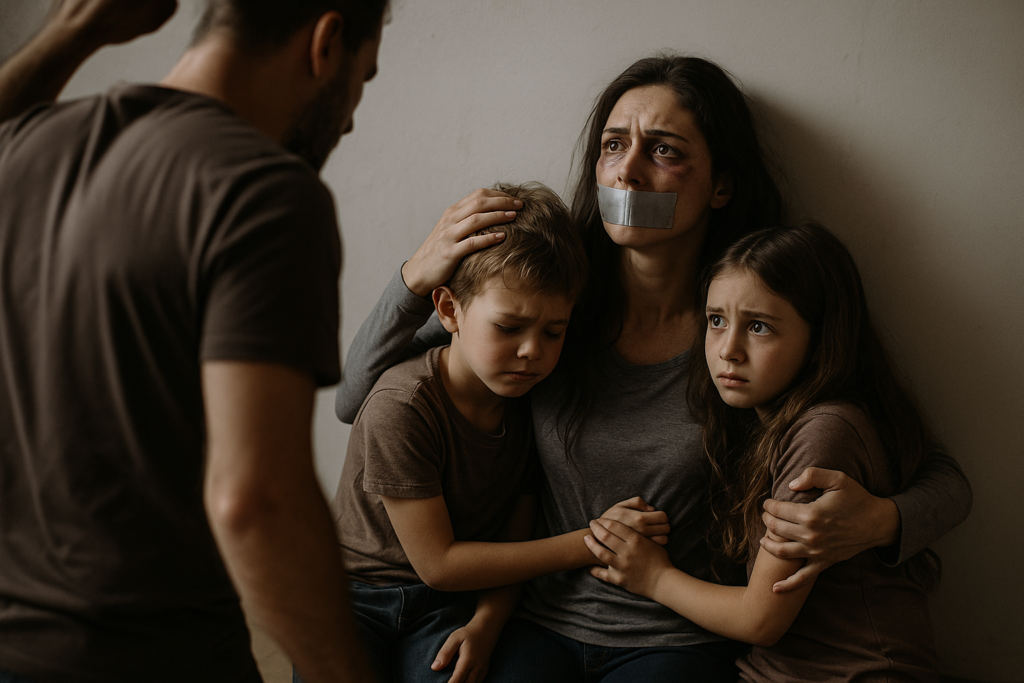
It would be incomplete to talk about what women carry at work without acknowledging what many of them are also carrying at home. We have written extensively about this on the EPIC blog — including our piece on Australia’s hidden domestic violence pandemic. The headline figure is this: 78 women were killed by gender-based violence in Australia in 2024 — the worst year on record, a 22% increase on 2023.
One woman is killed every nine days. By someone she knew. While governments held summits and issued statements.
This is not separate from the workplace conversation. Women experiencing coercive control at home are less able to advocate for themselves at work. Women without economic independence cannot leave dangerous situations. The gender pay gap in construction is not just an equity issue — it is a safety issue. Economic independence is protection. When women earn 30.6% less than their male counterparts in this industry, that gap has consequences that reach far beyond the pay slip.
Balance the Scales is the theme for 2026. But you cannot balance the scales while one side is being weighed down by harassment at work, violence at home, pay gaps that limit independence, and a complaints process that too often protects the institution over the individual.
What’s Actually Changing — and What Still Isn’t

There is some genuine progress to acknowledge. Victoria’s new psychosocial risk regulations, which commenced on 1 December 2025, mean Australia now has a nationally consistent baseline for managing psychosocial hazards — including bullying and harassment. As we covered in our post on how far Australian construction has really come, regulators are shifting from guidance to enforcement. Comcare is now initiating investigations based on signals and early indicators — not just formal complaints.
Victorian Government social procurement targets — including 35% women in management on major projects — are pushing the dial, even if, as we hear from people working directly on those projects, no Victorian project has yet fully achieved that target.
A 2026 study published in Buildings — the most recent peer-reviewed research on DEI in Australian construction — found that women consistently reported lower satisfaction with workplace culture, fewer leadership opportunities, and more barriers related to work-life balance. The research named three persistent structural problems: a masculine workplace culture that implicitly tolerates discriminatory practices; a lack of female role models in leadership; and work-life balance challenges that disproportionately affect women.
These are not new findings. Versions of this research have been published for decades. The conversation about what needs to change is not the problem. The pace of change is.
Five Women Who Are Doing the Work Anyway
Over the past year, I have had the privilege of interviewing more than 50 construction leaders for the EPIC Book of Wisdom — a living record of knowledge, courage, and hard-won wisdom from people who have spent decades in this industry. For International Women’s Week 2026, I want to close with five of the women whose stories have stayed with me. You can hear their full conversations on the EPIC podcast.
Penny Petridis
Founder, Female Tradie & Get Handy Workshops | NSW
Penny Petridis has been in the trades for over 30 years — boilermaking, metal fabrication, carpentry, and building. She was 19 years old when she walked into a TAFE boilermaking class with no female toilets, no other women in the room, and no roadmap. She showed up every day anyway. Today, through Get Handy Workshops, she has delivered trades training to more than 1,000 women across Australia. Her Breaking the Barriers program supported 30 women into trades after the Northern Rivers floods. Her Eden House Tiny Home project taught 11 homeless women to build their own homes.
“I get up at 4.30 or 5 o’clock every morning. I’m driven. I’m excited. Because I know I can make such a difference.”
— Penny Petridis
Alana Luppi
Senior Project Manager, ESR | Victoria
Alana Luppi has 27 years of experience in construction. For much of that career, she worked FIFO — often the only woman in camps of 1,600 to 3,000 people. She moved furniture against her door at night. She waited until 10 pm to shower while a security guard stood outside. She called a counsellor weekly, not because it was in her safety plan, but because she needed someone to talk to. She never reported what happened. She knew what it would cost. Now she is writing Blueprint to Rise and founding the Speak Up Foundation — to give other women the legal, mental health, and career support she never had.
“We’re doing a lot to entice women in. But we’re not doing nearly enough to keep them here.”
— Alana Luppi
Cory Thomas Fisk
Founder, Construction Management Online | California, USA
Cory Thomas Fisk has been in construction for nearly 30 years. At 24, working on a prison project with 500 men and fewer than six women, she received notes on her car. Her boss worried about stalking. Degrading graffiti appeared about her in the bathrooms. She did not leave. She got her contractor’s licence, raised two boys solo, taught construction management at college for nearly two decades, and built Construction Management Online to help tradespeople transition into leadership with not just technical skills, but the soft skills, behavioural awareness, and mindset that determine whether someone becomes a leader or just a person with a title.
“The construction industry is moving toward an innovative, creative environment — and women’s flexibility, adaptability, and empathy make us perfect for it.”
— Cory Thomas Fisk
Divya Mehta
Group CEO, Decode | New South Wales
Divya Mehta arrived in Australia from Pune, India, with an architecture background, a master’s degree, and a construction management qualification. She received 90 rejections. Every one of them said the same thing: “Unfortunately, you don’t have local experience.” She walked into a five-person company and said, “Sit me at reception if you like. I don’t need to be paid. I just need a first step in.” Today, she is Group CEO of Decode — a 200-person, $250–350M company with 40+ nationalities on the team, built on the mantra: “We are believers in opportunities for everyone.”
“That word ‘unfortunately’ had become my destiny. And I wasn’t even getting an opportunity to be interviewed.”
— Divya Mehta
Kate Hogan
Social Enterprise & Inclusion Lead, John Holland | Victoria
Kate Hogan works inside one of Australia’s largest Tier 1 contractors, on the Eastern Freeway Upgrade — managing Victorian Government social procurement targets, including a 35% women in management commitment that, to the best of anyone’s knowledge, no Victorian project has yet fully achieved. She manages the complexity of Indigenous procurement without black-cladding. She connects subbies who want to do the right thing with the support to actually do it. She does this from inside the system, which is, she knows, both its limitation and its power.
“It can sometimes feel really thankless. But you can’t think about it day by day. You have to think long-term.”
— Kate Hogan
Balance the Scales — or Reckon with the Weight
International Women’s Day 2026 gives us the language of balance. But language without accountability is just decoration. The scales in Australian construction will not balance because we named the problem at a conference. They will balance when women can go to work without calculating their safety. When a complaint is not a career risk. When a skills shortage is met not by recruiting women into hostile workplaces, but by making workplaces worth joining.
Penny built something. Alana is building something. Cory teaches the next generation how to lead. Divya created the entry point she never got. Kate holds the room accountable.
They are not waiting for the scales to balance on their own. They are doing the balancing themselves — at real personal cost, with extraordinary skill, and with more grace than this industry has ever fully deserved.
“To every woman in construction reading this: you are not alone. Your experience matters. Your knowledge matters. And this industry needs you to stay.”
— Angela Hucker
If you are ready to make your workplace one that women actually want to stay in, let’s talk. And if this piece resonated with you, share it with someone who needs to read it. The conversation is how the scale starts to shift.
Related reading:
The Unspoken Reality Facing Women About to Enter Construction
Sexual Harassment in Australian Workplaces 2025
When One Woman Dies Every Nine Days: Australia’s Hidden Pandemic
Five Years of Closing Australia’s Gender Pay Gap: Progress & Setbacks
How Toxic Culture Can Kill Construction Productivity
Mental Health: The Silent Crisis on Australian Construction Sites
EPIC SERVICES GROUP | Be Kind Always | epicservices.group