By Angela Hucker, Founder and CEO, EPIC
A supervisor told me once that the best part of his week was the twenty minutes on a Thursday when he picked up a tool and fixed something himself.
He said it almost apologetically, the way people do when they know they are admitting something. Then he said the sentence that has stayed with me. “It’s the only part of the week where I know for certain I did a good job.”
That is the whole problem, said better than I have ever managed to say it.
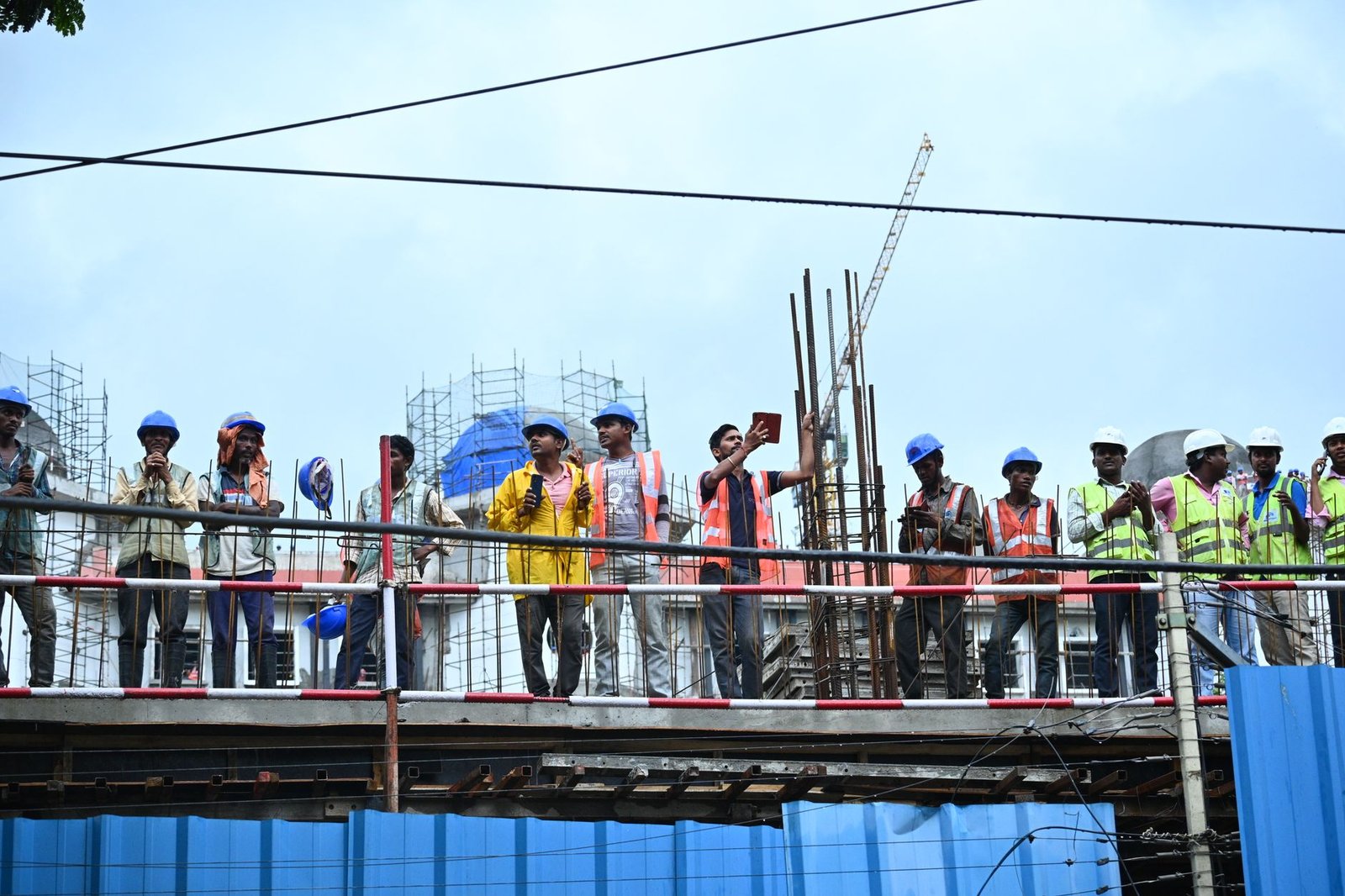
When construction leaders tell us what they are struggling with before they walk into a workshop, some version of this comes up constantly: I cannot get off the tools, I am trying to be everywhere at once, I am still doing the work instead of leading it. After training, delegation is one of the two areas where people most often report their confidence has shifted.
This article is about why the gap exists in the first place, because almost everything written about delegation gets the reason wrong.
1. The time management argument, and why it never works
The standard diagnosis is that supervisors do not delegate because they are too busy, or because they do not trust their crew, or because it is faster to do it themselves. The standard prescription is time management. Prioritise. Plan your week. Learn to let go.
Every one of those observations is accurate. And the prescription almost never works, which should tell us the diagnosis is incomplete.
Because nobody in this industry resists delegation because they enjoy being overloaded. They resist because of something the time management framing cannot see.
Think about what we actually do to a person when we promote them. We take someone who has spent fifteen or twenty years becoming genuinely excellent at a craft. Their competence is visible, certified, and confirmed daily by work they can point at. Then we move them into a role where their output is other people’s output, where the feedback is slow and ambiguous, and where they have had no training at all.
Of course they go back to the tools. The tools are the last place their competence is certain.
Delegation is not a time management problem. It is an identity problem, and you cannot fix an identity problem with a calendar.
“A leader who remains the answer to every problem eventually becomes the limit on the team’s capability.”
2. Helping and rescuing look identical from the outside
Here is where it gets uncomfortable, because the behaviour I am about to describe feels like generosity while you are doing it.
A young bloke on your crew is struggling with a set out. You can see he has it wrong. You have thirty seconds and you can fix it. So you walk over, take it off him, do it properly, hand it back, and say no worries mate.
You have just helped him. You have also just taught him four things you did not intend to teach: that when it gets hard the boss takes over, that you did not think he could work it out, that the fastest route to a solved problem is to look stuck, and that he will need you again next time.
Do that twenty times and you have built a crew that escalates everything, and a supervisor who cannot leave site without the work slowing down. Then you wonder why nobody takes ownership.
The distinction is simple to state and hard to live. Helping leaves the problem with the person and adds capability. Rescuing takes the problem away and adds dependency. Both feel kind. Only one of them is.
3. Delegating is not offloading
When supervisors do finally start handing work over, the first attempt is usually offloading, and it fails badly enough that many of them conclude delegation does not work on a construction site.
Offloading is handing someone a task. Delegating is handing someone an outcome, along with the context, the authority and the boundaries to achieve it.

Offloading and delegating, side by side
Same job handed to the same person. Only one of them builds anything.
| Offloading | Delegating | |
|---|---|---|
| What is handed over | A task. “Go and sort out level three.” | An outcome, with the standard and the reason it matters. |
| Context | None. They do not know why, or what it feeds. | Why it matters, what depends on it, what went wrong last time. |
| Authority | Unclear, so they come back for every decision. | Stated explicitly. “You can call the material order. Ring me before you move the crane.” |
| Boundaries | Discovered by getting it wrong. | Named up front. Budget, safety limits, who else they can direct. |
| Check point | The leader appears unannounced when they get anxious. | Agreed at the start. “I will come past at two.” |
| When it wobbles | Leader takes it back. Everyone is relieved and nothing changes. | Leader asks questions and the person keeps ownership. |
| What is built | A completed task and no additional capability. | A completed task and someone who can do it unsupervised next time. |
Offloading is faster this week. Delegating is the only one of the two that is ever faster next month.
4. The delegation ladder
The mistake most new supervisors make is treating delegation as binary. Either I do it, or they do it. In practice there are levels, and moving a person up the ladder deliberately is the actual skill.
Five levels of delegated authority
Match the level to the person and the task, then move them up one rung at a time
-
1
Do exactly this
Full instruction, no discretion. Right for a brand new apprentice, an unfamiliar task, or anything safety critical. Necessary, but stay here too long and you build a crew that cannot think. -
2
Look into it and report back
They gather the information, you make the call. Low risk way to start building judgement, because their thinking becomes visible to you. -
3
Recommend an option
They come to you with a decision and their reasoning. This is the rung where most capability is actually built, and where most supervisors skip straight past. -
4
Decide and tell me
They act, then inform you. You keep visibility without being a bottleneck. Most competent tradespeople should be here on most of their work. -
5
Own it
They decide, act, and only escalate by exception against agreed boundaries. This is what a leading hand or a senior tradesperson should look like, and it is how you build your own successor.
When something goes wrong, drop one rung, not five. Dropping to level one is how you tell a capable person you no longer trust them.
That last note matters more than the ladder itself. The most common way supervisors destroy ownership is by responding to a single mistake with a total withdrawal of authority. The person notices immediately, everyone else notices too, and the message received is that autonomy here is conditional on never being wrong.
5. Recoverable mistakes, and the ones that are not
Whenever I say that people need room to make mistakes, someone in a construction room quite rightly pushes back. We are not in an office. Some mistakes here put people in hospital.
They are completely right, and any advice that ignores it does not belong on a construction site. So let me be precise, because this distinction is what makes delegation safe rather than reckless.
Sort every task into two categories before you delegate anything.
Safety critical and irreversible. Anything where the consequence of getting it wrong is injury, structural failure, or damage that cannot be undone. Exclusion zones, load calculations, live services, permit work, temporary works, confined spaces. Here you do not delegate the learning. You supervise directly, you verify, and you do not move someone up the ladder to satisfy a program.
Recoverable. Sequencing, coordination, material ordering, setting out that can be checked before it is committed, running a small crew, chasing a subcontractor, planning a fortnight. The worst case is rework, a delay, or an awkward phone call. This is where the entire capability of your team gets built, and it is where most supervisors still refuse to let go.
The failure I see is not leaders being reckless with safety critical work. It is leaders using safety as the reason they cannot delegate anything, when the tasks they are hoarding are almost entirely in the second category.
That last figure is worth connecting to this topic specifically. With Jobs and Skills Australia continuing to identify construction trades among the most persistent national shortages, capability we fail to build internally is capability we will be trying to recruit in a market that does not have it. Every supervisor who takes the work back instead of coaching through it is quietly making the pipeline problem worse, and growth is one of the eight experiences that decides whether people stay.
6. Coaching through questions
The practical mechanism that replaces rescuing is not complicated. It is asking instead of answering, and it takes about ninety seconds longer than doing it yourself.
Someone comes to you with a problem. Before you solve it, ask three questions:
“What have you tried?” Half the time they have already worked it out and want permission rather than an answer. Giving them the answer when they had it robs them of the confidence they were about to earn.
“What do you reckon we should do?” This is the one that changes crews. Ask it consistently and people start arriving with a proposal rather than a problem, because they know it is coming.
“What do you need from me?” Often the answer is not a solution. It is a decision, a phone call to someone more senior, or simply the authority to proceed. Give exactly that and nothing more.
There is a version of this that is unfair, and it is worth naming. Asking questions of someone who genuinely does not know the answer is not coaching, it is a test they cannot pass. If the person lacks the knowledge, teach them. Coaching is for people who have the raw material and need to learn to trust it.

7. Trusting without disappearing
The overcorrection is real, and I see it in supervisors who have just been told to stop micromanaging. They swing to the opposite extreme, hand everything over, stop checking anything, and call it trust.
That is not trust. That is abdication with better branding, and crews find it more unsettling than hovering, because now nobody knows whether the work is acceptable until it is too late to change.
The resolution is the same mechanism from setting clear expectations: agree the check point when you hand the work over, not when you start to worry. An agreed check point is oversight. An unannounced one is surveillance. The difference is entirely in when it was mentioned.
Gallup’s long-running workplace research has consistently found that the manager accounts for the large majority of the variance in team engagement. Autonomy with clarity is one of the strongest levers a frontline leader has, and it is free.
What should change
1. Name the identity problem out loud. Tell newly promoted supervisors directly that stepping off the tools will feel like losing the thing they were good at, and that the feeling is normal rather than a sign they made the wrong choice. Almost nobody says this to them, and the silence makes it worse.
2. Give them a new measure of a good day. If the only thing that feels like achievement is completed work you did yourself, you will keep doing work yourself. Replace it deliberately: someone made a decision without me, a problem was solved before it reached me, an apprentice did something today they could not do last month.
3. Sort the task list into two columns. Safety critical and recoverable. Then look honestly at how much of what you are holding sits in the second column. For most supervisors it is the large majority.
4. Move one person up one rung this month. Not everyone, not everything. Pick one capable person and one recoverable task, and move them from “recommend” to “decide and tell me.” Delegation grows by rungs, not by leaps.
5. Stop rewarding the supervisor who is always on the tools. If your business praises the leader who jumps in and saves the day, you will get more of it. Praise the leader whose crew ran a week without them instead. That is the harder achievement and it is almost never recognised.
The limit on your team is usually you
Every crew has a ceiling, and it sits exactly where the supervisor stops letting people think.
If every problem routes through you, your team can only ever be as capable as your available attention. On a busy site, your available attention is the scarcest resource there is. That is not a criticism of you. It is arithmetic.
The supervisor who fixed something with his own hands on a Thursday was not wrong to enjoy it. He was wrong about what his good day looks like now. Nobody had ever told him it changed.
Make the shift off the tools deliberate
Moving from good tradie to good leader is a full module on day two of EPIC Elevate, followed by four months of support while the habit actually forms. For leaders already in the role and stuck, coaching is often the faster route. Talk to us about which fits.
Be Kind Always.
Frequently Asked Questions
Why do new construction supervisors keep going back to the tools?
Because the tools are the last place their competence is certain. We take someone whose skill was visible, certified and confirmed daily, and move them into a role where their output is other people’s output and the feedback is slow and ambiguous. Going back to the tools is not laziness or poor time management. It is an identity problem, which is why calendars and prioritisation training do not fix it.
What is the difference between helping and rescuing?
Helping leaves the problem with the person and adds capability. Rescuing takes the problem away and adds dependency. Taking a task off someone who is struggling feels generous, but it teaches them that the boss takes over when it gets hard and that looking stuck is the fastest route to a solved problem.
What is the difference between delegating and offloading?
Offloading hands over a task. Delegating hands over an outcome, along with the context, the authority to make certain decisions, the boundaries, and an agreed check point. Offloading is faster this week. Delegating is the only one of the two that is ever faster next month.
How do you delegate safely on a construction site?
Sort every task into safety critical and irreversible, or recoverable. Safety critical work such as exclusion zones, load calculations, live services, permit work and temporary works is directly supervised and verified, and you never move someone up a level to satisfy a program. Recoverable work such as sequencing, coordination and planning is where capability is built, and it is where most supervisors still refuse to let go.
How do I trust my crew without losing oversight?
Agree the check point when you hand the work over rather than when you begin to worry. An agreed check point is oversight. An unannounced one is surveillance, and the difference is entirely in when it was mentioned. Handing everything over and checking nothing is not trust, it is abdication, and crews find it more unsettling than hovering.