|
Getting your Trinity Audio player ready...
|
Why gender equity posters mean nothing if the culture behind them hasn’t changed.
Walk onto almost any major construction site today, and you’ll see posters championing respect, inclusion, and zero tolerance for harassment.
Many of these companies genuinely believe things are improving. Some point to their policies. Others highlight recruitment targets or glossy gender equality campaigns.
And yes — there has been progress.
But when you listen closely to women who have spent 20+ years in this industry, a different story emerges. A story that reveals just how far construction still has to travel before women are trusted, not tested.
One of the clearest examples comes from Amy O’Connor, who generously shared her early-career experience in her EPIC Podcast interview.
Amy walked into her first site office to find the walls covered in centrefold pornography — a deliberate signal about who belonged and who didn’t. It wasn’t accidental. It wasn’t oversight.
It was a test. A test of her tolerance. A test of her silence. A test of how much she was willing to put up with to stay employed.
Amy described how these behaviours weren’t isolated; they were constant — comments, “jokes”, assumptions, and subtle digs intended to see whether she would flinch or fall in line. At the time, she did what many women did to survive: she laughed things off, tried to blend in, and avoided making waves. She normalized harm because the alternative — speaking up — felt professionally dangerous.
This is the cultural inheritance many women still walk into today.
“Death by a thousand cuts” — what microaggressions really do to a woman’s career
Where Amy’s story highlights the blatant exclusion of the past, Vanessa Hetherington offers a sobering view of the subtle discrimination still at play today.
Vanessa Hetherington shared her experience of being handed someone’s coat at a corporate event — the woman assuming she must be the cloakroom attendant.
A small moment. A small assumption. But a deeply revealing one.
As Vanessa described:
After so many years in the industry, it made me feel like I didn’t belong… My husband has never had anyone hand him their coat.
This isn’t just awkward — it’s painful. And it isn’t rare.
Vanessa helped lead the Not So Little Things research on microaggressions, where 88% of women reported experiencing microaggressions at work, and among migrant women and women with disabilities, the number was 100%. These behaviours came mostly from supervisors and line managers — the very people responsible for their psychological safety.
This is why women describe it as “death by a thousand cuts.” One incident won’t break a career. A thousand will.
The shift from laughing it off to setting boundaries
What’s powerful about both Amy and Vanessa’s stories is how their responses evolved. Amy eventually stopped laughing off bad behaviour. She began to challenge comments. She put up boundaries. She modelled the courage she wished more leaders had shown for her younger self.
Vanessa eventually left the company that tolerated bullying. She sought workplaces where she didn’t have to shrink, and she now advocates for others to recognize microaggressions early — before they erode confidence and identity.
Their stories embody the truth leaders must understand:
Women haven’t suddenly become more sensitive. Women have finally stopped accepting the unacceptable.
ALSO READ: The Unspoken Reality Facing Women About to Enter Australia’s Construction Industry
The illusion of improvement: why policies aren’t enough
Construction leaders often point to progress:
-
More women in entry-level roles
-
More gender equity messaging
-
More flexible work policies
-
More corporate training
But without behavioural and cultural alignment, these become empty symbols. Consider three realities:
Reality 1: Microaggressions still define women’s day-to-day experience.
Small slights accumulate into significant harm — eroding confidence, increasing turnover, and pushing women out of the industry entirely.
Reality 2: Blatant exclusion still happens — just in more sophisticated ways.
Pornography on walls may be gone, but women are still tested with:
-
assumptions about their seniority
-
exclusion from key conversations
-
undermining comments
-
being mistaken for support staff
-
being talked over, dismissed or ignored
Reality 3: Leaders underestimate the emotional labour women perform
Women in construction aren’t just doing their jobs. They’re constantly:
-
scanning for risk
-
assessing safety
-
managing perceptions
-
balancing tone and approach
-
navigating bias and microaggressions
It’s exhausting — and avoidable.
And here are the shocking revelations by the numbers:
-
Only 2% of tradespeople in Australia are women.
-
Women make up just 12% of the construction workforce overall.
-
48% of women in construction consider leaving within five years due to culture-related issues (NAWIC).
-
Microaggressions were reported by 88% of women in Australia’s Not So Little Things study.
-
1 in 3 women in construction have experienced sexual harassment at work (Safe Work Australia).
These aren’t isolated incidents. They’re systemic indicators. You cannot fix the skills shortage without fixing culture. You cannot attract women without protecting women. And you cannot increase retention without eliminating behaviours that harm them.
So how far have we really come?
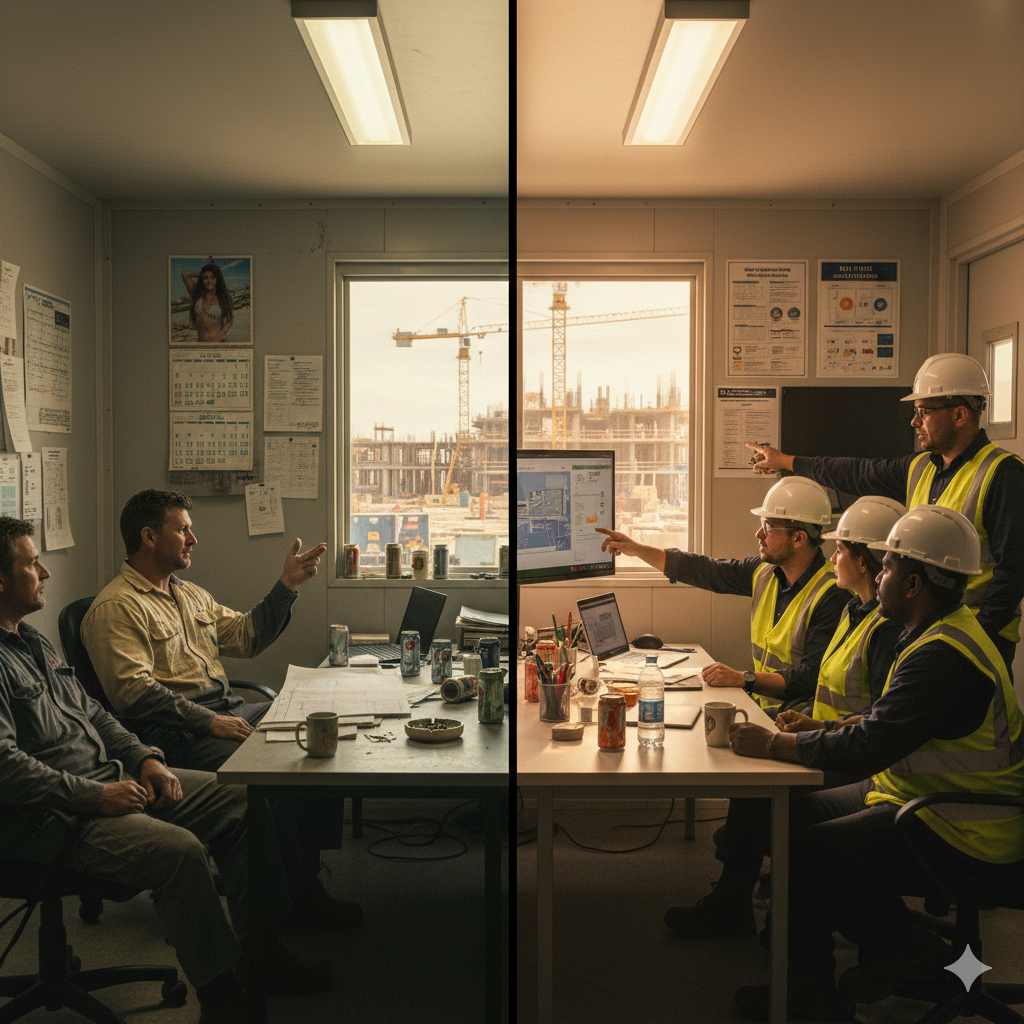
We’ve moved from centrefolds on walls to posters about respect. But culture doesn’t change because posters do. The real shift happens when leaders:
-
intervene when they see inappropriate behaviour
-
stop excusing “jokes” as harmless
-
call microaggressions what they are: psychological harm
-
train supervisors in people leadership, not just technical skills
-
measure inclusion, not just mandate it
-
build environments where women aren’t tested — they’re trusted
Trust is built when women can bring their full selves to work without having to defend their right to be there. The question every leader should ask themselves is if a young woman walked onto your site today, would she feel welcomed — or would she feel tested?
Your answer shapes not just her future, but the future of the entire construction industry.
Want to attract and retain more women in your workforce?
“Construction Leaders Facing the Skills Shortage: How to Attract the Best Talent.”
It gives leaders the practical steps they need to build safer, fairer, more inclusive workplaces — the kind that women actually want to stay in.