By Angela Hucker, Founder and CEO, EPIC
A woman on a construction site was sent to McDonald’s to use the toilet.
Not in 1985. Recently. It was shared on LinkedIn, and when I raised it with a UK construction leader I interviewed, a chartered professional with more than thirty years in the industry who has spent years researching the treatment of women in construction, her reaction was three words.
Like still? Really?
And then she said something that has stayed with me ever since. We are never going to get an inclusive industry if we cannot even allow for the other part of the population that needs a toilet.
That is what this article is about. Not the dramatic headlines. The small, everyday, completely fixable things that quietly tell women in construction, over and over, that this industry was designed without them. Because after thirty years inside it, I can tell you the women leaving this industry are rarely defeated by the work. They are worn down by a thousand small designs that never considered them.
The issue: an industry built around a default body
Most of the modern world was designed around a default human, and that default is male. Crash test dummies were modelled on the average male body for decades, which is part of the reason women are significantly more likely to be injured in comparable car crashes. Medication dosing, office temperatures, smartphone sizes, the list is long and well documented.
Construction is one of the most concentrated examples of this anywhere. The sites, the equipment, the facilities, the rosters, the career structures, all of it evolved over a century in which the workforce was almost entirely male. None of it was designed maliciously. It simply was not designed with women in it.
So when a woman walks onto a site today, she steps into an environment where the defaults quietly work against her. And then the industry wonders why women make up just 13% of the construction workforce, why only around 3% of trade-qualified workers are women, and why construction carries the widest gender pay gap of any industry in Australia at 23.8%, according to the Workplace Gender Equality Agency.
Where women stand in Australian construction
Construction has the widest gender pay gap of any Australian industry
Share of construction workforce 13% Share of trade-qualified workers ~3% Gender pay gap (widest of any industry) 23.8%Sources: Workplace Gender Equality Agency; Australian construction workforce data.
We have spent years calling this a pipeline problem. It is not. Brand new Australia-wide research from the University of Adelaide, published just weeks ago, found that young women are genuinely interested in construction careers. The interest exists. What deters them is workplace culture, lack of flexibility, unclear career pathways and safety concerns. Things entirely within the industry’s control.
The pipeline is fine. The destination is the problem.
The evidence: the everyday designs that push women out
Let me walk through them. Individually, each one looks small. Together, they form a pattern that no recruitment campaign can outrun.
The PPE that does not fit
Personal protective equipment is the most literal example of design exclusion in this industry. For decades, “women’s PPE” meant small men’s sizes. Gloves that bunch. Boots that blister. Harnesses engineered around a male torso, which is not a comfort issue but a safety issue, because a fall-arrest harness that does not fit correctly does not protect correctly.
I have heard from women across this industry who have modified their own PPE with duct tape to make it wearable. Think about that. We hand workers safety equipment that does not fit their bodies, they alter it themselves to get through the day, and the industry calls itself safety-first.
If a male worker were issued boots two sizes wrong every day of his career, we would call it a WHS failure. When women experience the equivalent across their entire kit, it is treated as a niche procurement preference.
The toilet that is not there
Sanitation sounds like the most basic thing imaginable, and that is exactly the point. Decades into the conversation about women in construction, women are still arriving on sites with no female toilets, walking to nearby fast food outlets, or managing with facilities that are unhygienic or lack sanitary disposal.
The knock-on effect is worse than inconvenience. Women on site report deliberately drinking less water through the day to avoid needing the toilet. On hot, physical, high-risk worksites, that is dehydration as a workplace adaptation. A health risk created entirely by a facilities decision.
One of the leaders I interviewed for the EPIC Construction Leadership Report 2026 told me about putting the first woman onto one of her company’s sites back in 2009. The objections from site management were that the boys would not be able to speak freely in the shed, and that there were no toilets. Her answer was simple. We will get another toilet. It is fine.
That was the entire barrier. One toilet. It has been one toilet for decades.
The pregnancy that becomes a problem
In a Fair Work Commission case decided just months ago, a pregnant worker provided a doctor’s certificate stating she should not lift more than five kilograms but was otherwise fit for work. Within days she received a text message telling her no light duties were available and her shifts were being put on hold. The deputy president described the message as people and culture puffery and lawyerly disclaimers, and found that in substance her employment had been suspended from the day she disclosed her pregnancy until, in his words, the 12th of never. She won, and was awarded nearly $15,000 plus superannuation.
She had to fight, while pregnant, through a legal process, to keep a job she was medically fit to do.
The research tells us she is far from alone. Around one in two women experience discrimination connected to pregnancy, parental leave or return to work, and most never lodge a complaint. They just leave. In construction-aligned research, 63% of women cite a lack of pregnancy accommodations among the top reasons they consider leaving the industry or are deterred from entering it. The Fair Work Ombudsman is clear that pregnancy discrimination is unlawful. The everyday reality on sites has not caught up with the law.
The roster that assumes someone else is home
Construction’s standard working model, early starts, long days, six-day weeks, assumes the worker has someone at home absorbing everything else. School drop-offs. Sick kids. Childcare pickups that close at six.
For decades that assumption held because the workforce was male and the home support was invisible and unpaid. Apply the same roster to a woman who is also the primary or shared carer, and the maths simply does not work. 69% of women in construction cite difficulty finding childcare among the top reasons they seriously consider leaving. Not the work. The childcare.
Why women consider leaving construction
The top reasons are structural, not the work itself
Difficulty finding childcare 69% Lack of pregnancy accommodations 63% Bullying and discrimination experienced high 60s% Reported having been assaulted 3 in 10Sources: construction-aligned workforce research; international survey of women in construction across multiple countries.
And before anyone says that is just the industry, note that the Adelaide University research found flexibility ranked above salary in what would make construction viable for young women. The industry keeps reaching for pay as the lever. The women keep telling us it is the structure.
The culture that polices belonging
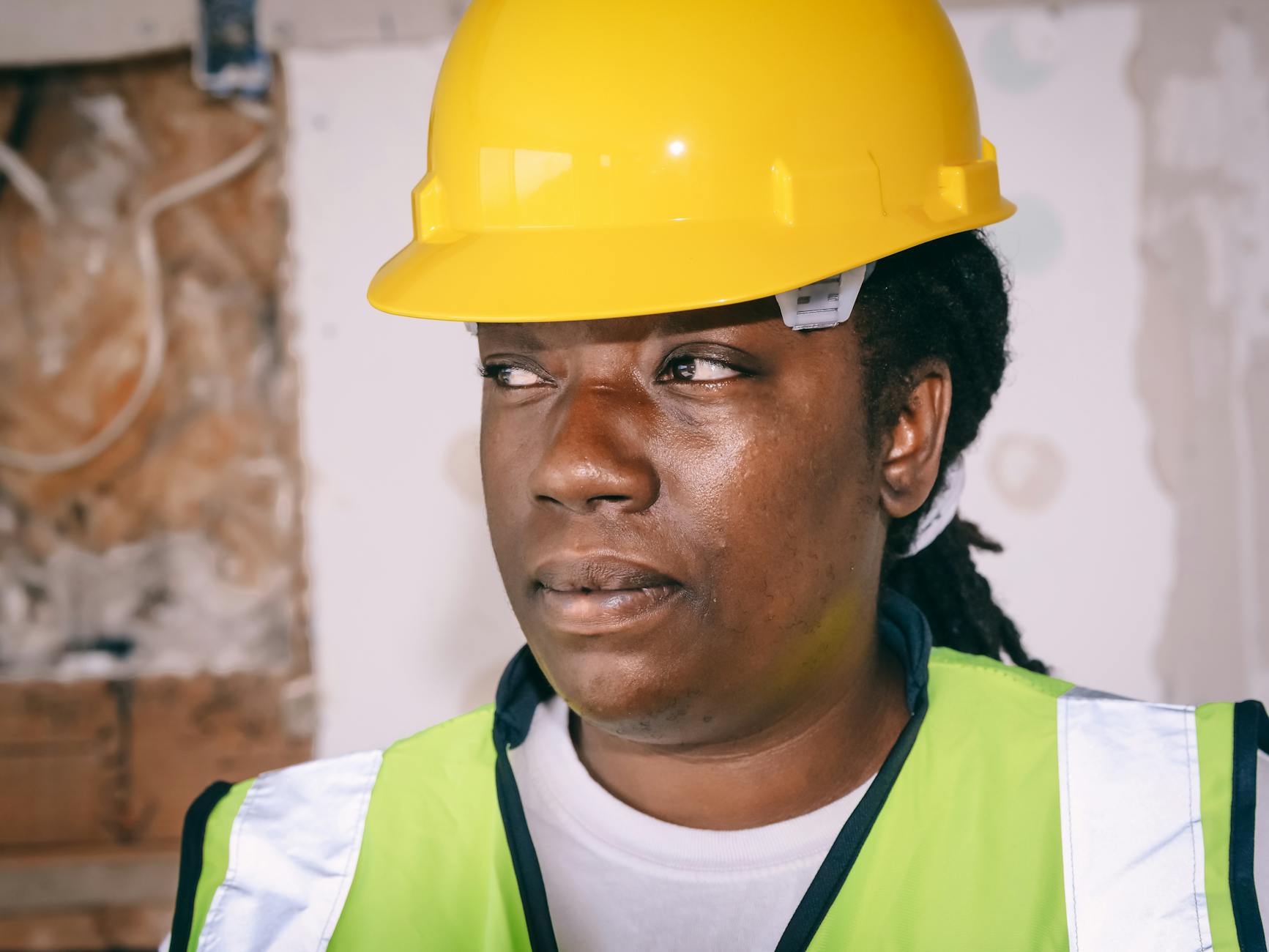
Underneath all the physical designs sits the cultural one. The woman interviewed for our report who was told on her first day, by the man assigned to train her, all the reasons women did not belong on site. Six weeks later, after working with a male apprentice instead, he asked for her back. She was better. The belief survived anyway.
Another told me about a colleague who joked repeatedly about violence against his wife, and when she objected, told her: you are in a man’s world, you need to respect that. She was an apprentice. She stayed, she pushed back, and she eventually managed a 60-storey high rise. But every woman who tells me a story like that can name several others who walked instead. The UK researcher I mentioned earlier surveyed women across multiple countries and found three in ten reported having been assaulted, and bullying and discrimination rates in the high sixties as percentages. This is the environment into which we are inviting the next generation of women and calling it an attraction strategy.
The solution: design her in
Here is the genuinely hopeful part. Almost everything above is fixable at a fraction of the cost of the problem, because none of it requires reinventing the industry. It requires deciding that women are not visitors.
1. Procure PPE that fits women, as standard. Women-specific PPE exists across every category, including properly engineered harnesses. Make it a standard procurement line, not a special order. Audit what your workforce is actually wearing. If anyone is modifying safety gear to make it functional, treat it as the safety failure it is.
2. Make facilities non-negotiable from day one of every site. Female toilets, sanitary disposal, secure and clean changing facilities, on every site, from establishment, regardless of whether a woman is currently on the crew. Provisioning only after a woman arrives announces that she is an exception. Designing it in announces that she is expected.
3. Treat pregnancy as a workforce planning event, not a problem. Have a documented light-duties pathway before anyone needs it. Train supervisors on their legal obligations and, more importantly, on the message their first reaction sends. A company that handles one pregnancy well retains more than one woman. Word travels.
4. Build flexibility into the structure, not as a favour. Job sharing, staggered starts, rostered day arrangements that actually align with childcare realities, and normalising flexibility for men too, so that using it does not mark women out. The companies doing this are not losing productivity. They are winning the people everyone else is losing.
5. Hold the line on behaviour, visibly. Policies do not change sites. Enforced standards do. Every time a comment is challenged by a leader, every time a complaint leads to real action, the culture recalibrates. Every time it is laughed off, it recalibrates the other way. This is leadership work, and it is teachable. It is core to what we deliver in our leadership training programs and through EPIC Elevate.
6. Fix the pathways. Unclear career progression came up repeatedly in the Adelaide research. Sponsor women into supervision and management deliberately. Mentoring and structured development, like our EPIC Evolve coaching, exist precisely because talent without pathway leaves.
Why this matters beyond fairness
If fairness alone moved this industry, it would have moved decades ago. So here is the commercial frame.
Construction faces a skills shortage measured in the hundreds of thousands of workers, with shortage rates across the sector estimated at 61%. Women are half the population and currently 13% of the workforce. There is no version of solving the workforce crisis that does not involve women, and there is no version of attracting and keeping women that does not involve fixing the everyday designs in this article.
Every toilet not provided, every harness that does not fit, every pregnancy mishandled, every roster that ignores childcare, is a recruitment campaign running in reverse. Quietly. Permanently. Site by site.
The industry keeps asking where the women are. The honest answer is that they came, they looked at what we built, and many of them left. They are not a pipeline problem to be solved. They are a verdict on the workplace we designed.
Design her in, and she will stay. I have watched it happen. I have spent thirty years in this industry, and I am still here, because I refuse to accept that the next generation of women should have to be as stubborn as mine was just to do work they love.
Download the full EPIC Construction Leadership Report 2026 for the complete evidence base, explore how we work with organisations on culture and inclusion, or contact us to talk about your site. The fixes are not complicated. They just require deciding to make them.
Be Kind Always.
Frequently Asked Questions
How many women work in construction in Australia?
Women make up approximately 13% of the Australian construction workforce, and only around 3% of trade-qualified workers. Construction also carries the widest gender pay gap of any Australian industry at 23.8%, according to the Workplace Gender Equality Agency.
Is the lack of women in construction a pipeline problem?
The latest evidence says no. Australia-wide research from the University of Adelaide published in 2026 found young women are genuinely interested in construction careers but are deterred by workplace culture, lack of flexibility, unclear career pathways and safety concerns, all factors within the industry’s control.
Is it legal for an employer to put a pregnant worker’s shifts on hold?
Suspending or sidelining a worker because of pregnancy is unlawful discrimination in Australia. In a recent Fair Work Commission case, a pregnant worker whose shifts were put on hold after she provided a medical certificate won compensation, with the deputy president finding her employment had effectively been suspended until the 12th of never. See the Fair Work Ombudsman for guidance on pregnancy and parental rights at work.
What are the most common reasons women leave construction?
Research consistently points to everyday structural issues rather than the work itself: difficulty finding childcare (cited by around 69% of women), lack of pregnancy accommodations (around 63%), ill-fitting PPE, inadequate site facilities, and workplace cultures where bullying and exclusion go unaddressed.
What can my company do first?
Start with the visible basics, because they signal everything else: properly fitting PPE as standard procurement, female facilities on every site from establishment, a documented pregnancy and light-duties pathway, and supervisor training on behaviour standards. EPIC supports organisations on all of these. Get in touch or explore our programs.