By Angela Hucker, Founder and CEO, EPIC
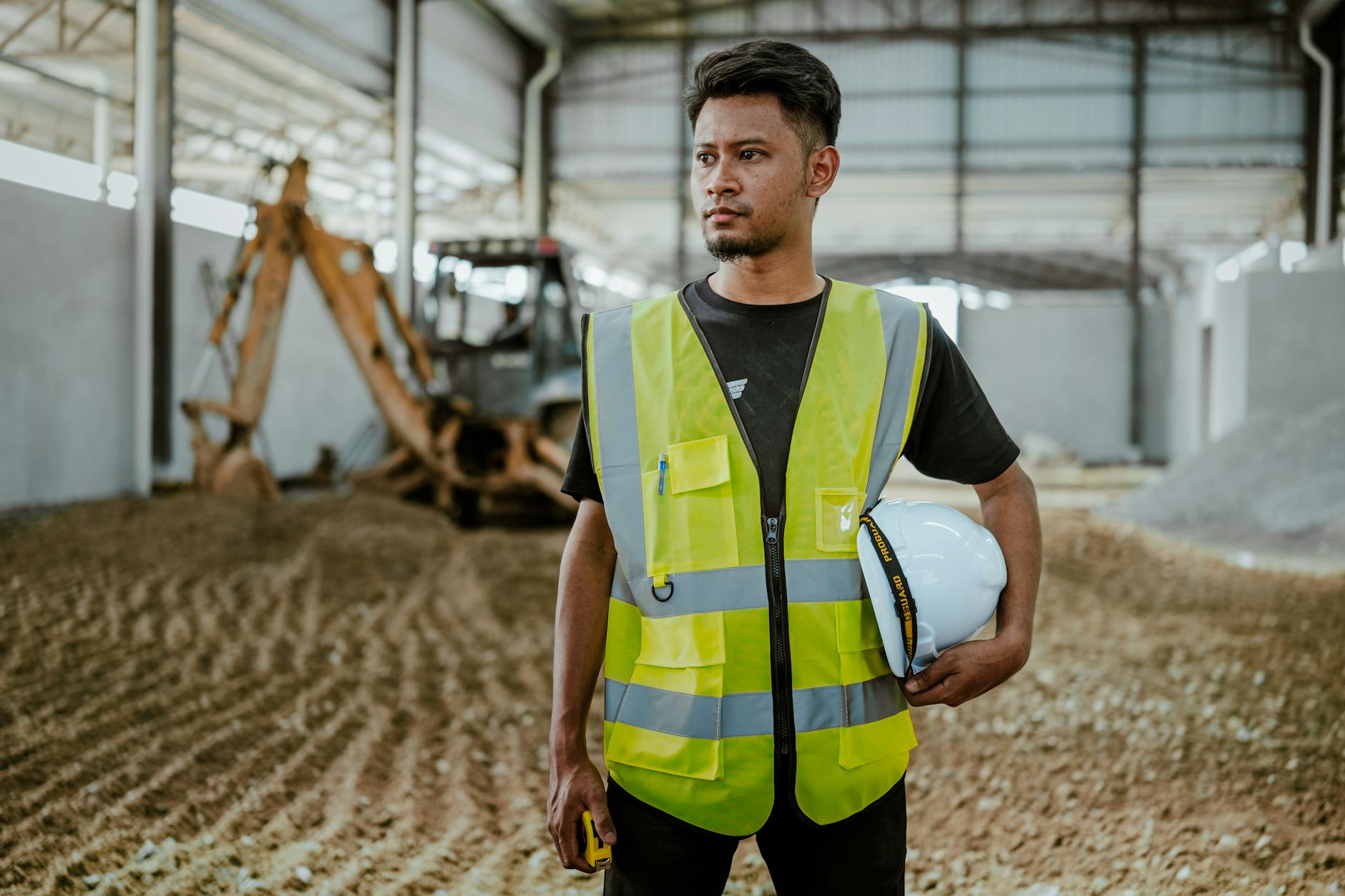
They made him a supervisor on a Friday.
On Monday he had a crew of fifteen and a schedule that was already two weeks behind. Nobody sat him down. Nobody asked if he was ready. Nobody taught him how to have a hard conversation, how to delegate without hovering, how to manage conflict, or how to support a worker who was clearly struggling.
He was the best tradie on site. So they handed him a clipboard and called it a promotion.
I have watched this exact story play out for thirty years, on sites across Australia and around the world. The names change. The trade changes. The outcome rarely does. And when I interviewed 50 construction leaders for the EPIC Construction Leadership Report 2026, it was the single most consistent theme across every conversation. 94% of them identified a leadership capability gap as a core challenge facing this industry. The most raised theme in the entire report. Above mental health. Above gender. Above safety.
This article is about that gap. Where it comes from, what it costs, and what actually closes it.
What 50 construction leaders said
The most raised themes in the EPIC Construction Leadership Report 2026 — 50 leaders, 1,354 combined years of experience
Leadership capability gap 94% Mental health and burnout critical 91% Psychological safety absent or inconsistent 88% Safety culture described as theatre 84%Source: EPIC Construction Leadership Report 2026 — interviews with 50 construction leaders worldwide.
The issue: technical skill is not leadership skill
Construction has a default promotion model, and it goes like this. Find the person who is best at the work. Put them in charge of the people doing the work. Assume the rest will sort itself out.
It is an understandable instinct. Technical credibility matters enormously on site. A supervisor who cannot do the work will struggle to earn a crew’s respect, and crews can smell a pretender from the gate. So we promote the gun tradie, the fastest formworker, the sharpest sparky, and we feel like we have made a safe choice.
But here is what we have actually done. We have taken someone out of a job they were brilliant at and put them into a job they have never done, with no training, and made fifteen other people’s working lives dependent on how quickly they figure it out.
Being brilliant at the tools tells you almost nothing about whether someone can lead. Leading is a different job. It is communication under pressure. It is reading a team. It is handling the bloke whose marriage is falling apart and whose work is slipping. It is having the conversation nobody wants to have, early, before it becomes a crisis. It is staying calm when the program blows out and everyone is looking at you.
None of that comes stamped on a trade certificate.
One of the leaders I interviewed for the report put it in a way I have not stopped thinking about. He spent decades as a frontline supervisor and he said the safety manager has one key performance area. The quality manager has one. The project manager has one. The frontline supervisor has all of them, simultaneously, all day, every day. And yet the supervisor is routinely the least trained person in the leadership chain.
Another leader, with more than forty years in civil construction, said it even more directly. We are not educating and training our supervisors to be leaders of influence and not dominance.
Influence, not dominance. That distinction is the whole game. Dominance gets compliance while you are watching. Influence gets commitment when you are not.
The evidence: what the accidental leader costs
The accidental leader is not a character flaw. It is a system failure. And the costs show up everywhere once you know where to look.
The team feels it first
Research on first-time managers across industries consistently shows that most people are promoted into leadership roles years before they receive any formal leadership training, if they ever receive it at all. Gallup’s research on engagement has found that managers account for the majority of the variance in team engagement. In plain language: the single biggest factor in whether your crew is engaged or checked out is the person leading them.
Now apply that to construction, where the frontline leader was often promoted on Friday and given a crew on Monday. The downstream effects are predictable. Communication breaks down. Conflict festers because the supervisor avoids it. Good workers feel unseen and start looking elsewhere. The crew stops raising problems because the leader does not handle them well. And on a construction site, a crew that stops raising problems is a safety risk, not just a morale problem.
The EPIC Construction Leadership Report 2026 found 88% of leaders saying psychological safety is absent or inconsistent on their sites, and 91% raising mental health and burnout as critical. Those numbers do not float free of leadership. They are largely produced by it. An untrained leader under pressure defaults to the only model they have ever seen, which in this industry is usually the hard-driving, never-show-weakness, just-get-it-done style they came up under. The cycle reproduces itself.
The leader pays a price too
Here is the part that gets missed. The accidental leader is often suffering as much as their team.
Think about what we do to that person. We take away the work that gave them mastery and identity. We give them responsibility for outcomes they can only achieve through other people, a skill nobody taught them. We make their days a stream of interruptions, conflicts, and paperwork. And then we judge them for struggling.
Many of them privately feel like frauds. They will not ask for help, because asking for help is not what this industry taught them. So they grind, they snap, they burn out, or they quietly go backwards into the workforce feeling like they failed, when the truth is they were set up to fail.

I delivered our first EPIC Elevate leadership workshop in Launceston recently, a room full of frontline construction leaders. On day two I ran a deceptively simple exercise. I pulled one participant out and made him the leader. His job was to use everything we had covered: clear communication, delegation, accountability, managing tension. Then I gave the group a pack of cards and five minutes to build a four-storey card tower that could hold a card on top. We work in construction, after all. We build impressive things.
They went straight at it. Cards slipping everywhere. Frustration rising. Everyone focused on the tower.
They did not build a thing.
And when the time was up I told them the truth. It was never about the structure. It was about how they engaged. Who stepped up. Who went quiet. How direction was given. How frustration was handled. Because that is leadership on a construction site. Small things going sideways, constantly, on the fly, with people watching how you respond.
You could see it land. These were experienced, capable people. And several of them realised in that moment that they had been leading for years on instinct alone, with no toolkit underneath them. Not because they did not care. Because nobody ever gave them one.
That is the accidental leader. Good people, doing their best, running on improvisation in the most leadership-intensive role in the industry.
The business pays last, and pays the most
Every consequence above eventually converts into money. Turnover, at an estimated $67,000 per skilled departure. Psychological injury claims averaging hundreds of thousands of dollars each. Rework from communication failures. Programs that slip because the crew has stopped giving discretionary effort. Absenteeism. And the slow reputational bleed that makes it harder to attract the next generation into your business at all.
The leadership capability gap is not an HR talking point. It is an operational liability sitting in the middle of every project you run.
The solution: stop promoting people into failure
The fix is not to stop promoting tradies. Technical credibility genuinely matters in this industry, and some of the finest leaders I have ever met came straight off the tools. The fix is to stop pretending the promotion is the development. Here is what that looks like.
1. Separate the decision from the assumption. Promote for leadership potential, not just technical excellence. Look for the person the crew already goes to when something is wrong. The one who explains rather than barks. The one apprentices want to work under. Technical skill gets you respect at the gate. These qualities get you a functioning team.
2. Train before, not after the wheels come off. Leadership development in construction usually arrives as remediation, after the complaints, after the turnover, after the incident. Flip it. Treat leadership training like a white card for people management: a prerequisite, not a reward. This is exactly why we built EPIC Elevate, practical two-day training designed for frontline construction leaders, dealing in real site scenarios rather than corporate theory. Our RISE program extends the same thinking with subsidised access so cost is never the excuse.
3. Teach the actual skills. Not vision statements. The real, daily mechanics: how to give clear direction, how to delegate and follow up, how to have a hard conversation early, how to handle the team member who is struggling, how to take feedback without blowing up, how to hold standards without humiliating people. These are learnable. I watch people learn them in a single room over two days.
4. Pair every new leader with a real support structure. A mentor who has done the job. A peer group. A manager who checks in on how they are leading, not just what they are delivering. The first twelve months of leadership set the pattern for everything after. Nobody should do them alone. Our coaching programs exist for exactly this stage.
5. Make leadership behaviour part of how leaders are measured. If supervisors are assessed purely on program and budget, leadership behaviour will always be sacrificed first under pressure. Put retention, team feedback and safety participation on their scorecard. What gets measured gets taken seriously.
The bigger picture
This industry is staring down a projected shortfall of hundreds of thousands of workers. We talk endlessly about attraction: campaigns, school programs, migration settings. All of it matters. But attraction without leadership is just pouring water into a bucket with a hole in it.
People do not leave industries. They leave sites, crews, and supervisors. Which means every dollar spent attracting workers into construction is wasted if the leader they land under was promoted on a Friday and abandoned on a Monday.
The accidental leader is the most fixable problem in construction. We know who they are. We know what they need. The training exists. The funding, in many states, exists. What has been missing is the willingness to treat leadership as a skill rather than a rank.
If this article describes someone in your business, or describes you, do something about it this quarter, not someday. Explore EPIC Elevate, look at the evidence in the Construction Leadership Report, or contact us directly. Turning accidental leaders into intentional ones is the highest-leverage investment available in this industry right now.
Be Kind Always.
Frequently Asked Questions
What is an accidental leader?
An accidental leader is someone promoted into a leadership role on the strength of their technical ability, without any training or preparation for leading people. In construction this typically means the best tradesperson being made a supervisor or foreman and left to figure out people management alone.
Why is this such a big problem in construction specifically?
Construction concentrates enormous leadership load at the frontline. Supervisors simultaneously carry safety, quality, program, cost and people responsibilities under constant pressure, yet they are routinely the least trained leaders in the chain. In the EPIC Construction Leadership Report 2026, 94% of leaders interviewed identified a leadership capability gap as a core industry challenge, the most raised theme in the report.
Does leadership training actually work for site-based leaders?
Yes, when it is practical and built for the environment. Site leaders respond to real scenarios, honest conversations and tools they can use the next morning, not abstract corporate frameworks. That is the design philosophy behind EPIC Elevate, which is delivered specifically for frontline construction leaders.
Is funding available for leadership training in construction?
In several states, yes. Industry training bodies fund or subsidise approved leadership programs for construction businesses. EPIC delivers funded training in multiple states. See the EPIC Elevate page and RISE program for current options, or get in touch to ask what applies in your state.
How do I know if my business has an accidental leader problem?
Look at the symptoms: turnover concentrated under particular supervisors, crews that stop raising issues, recurring conflict that never resolves, and capable people stepping back from leadership roles. If those patterns exist, the answer is almost certainly yes, and the gap is trainable.